Case study
Library management - Full-stack application
Context
A library needs a digital tool to manage its catalog, members, loans and reservations. Visitors must be able to browse the catalog online, members to manage their loans and reservations, and staff to administer the whole system with distinct roles (librarian, manager).
This project was developed in a team of 3 as an end-of-semester project. I was the project lead (coordination, planning, validation) while developing the entire Angular 21 front office, which consumes the Symfony REST API developed by the team.
Problem & goals
Problem
- No online catalog that users can browse
- Manual handling of loans and reservations, slow and error-prone
- No personal area for members (tracking loans, reservations)
- Need for distinct roles: librarians handle day-to-day operations, the manager administers the whole system
Goals
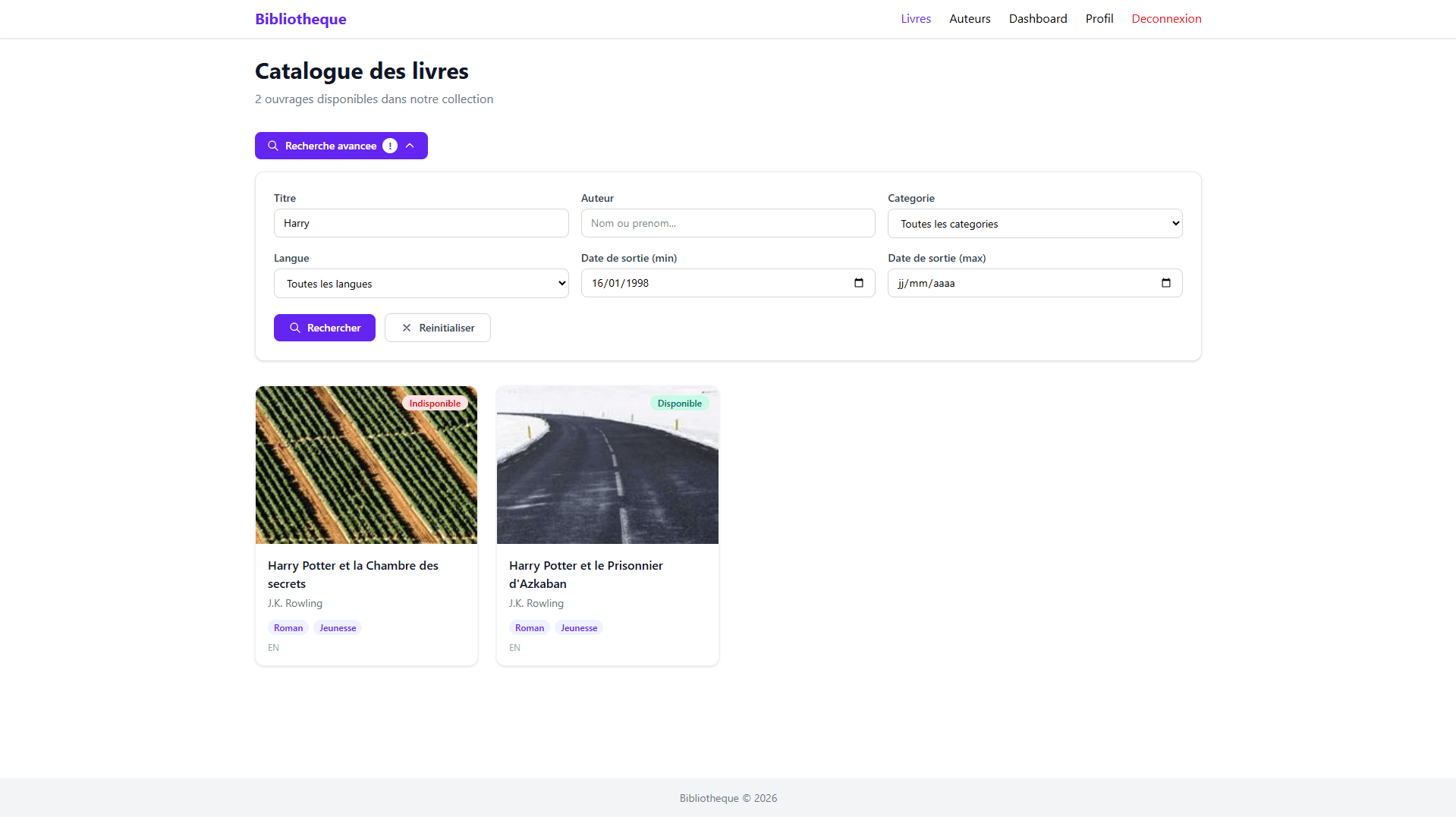
- Develop a public front office with a paginated catalog, multi-criteria search and a secure member area
- Expose a complete REST API with JWT authentication and business rules (max 5 loans, max 3 reservations, 7-day expiration)
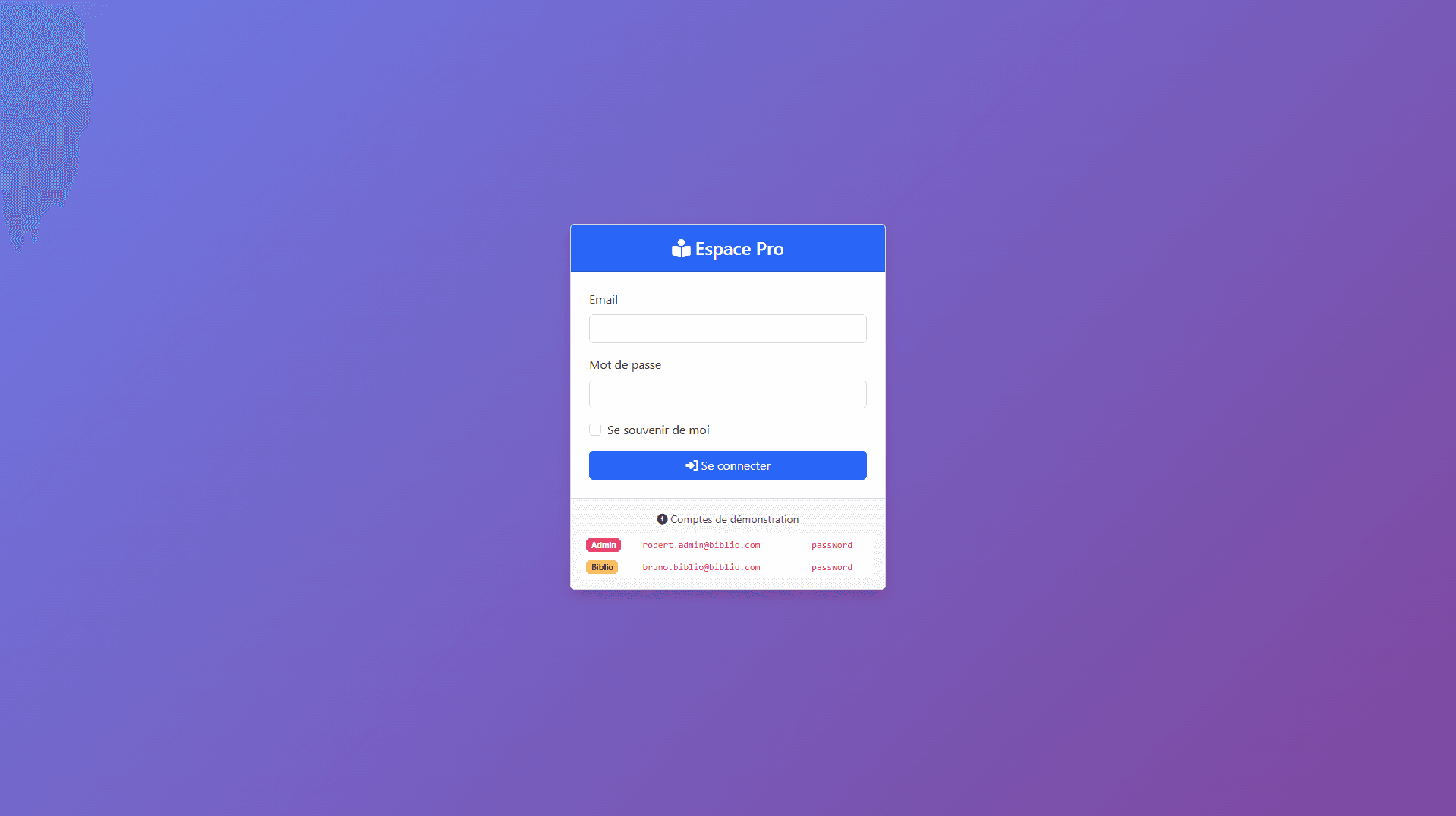
- Create an admin back office with a statistics dashboard, full CRUD and loan/return management
- Coordinate a team of 3 developers with a 5-phase plan and 39 user stories
Approach
As project lead, I structured development into 5 phases, with synchronization points between the teams:
- Phase 0 (Setup): Angular 21 architecture, structure of the Doctrine entities, configuration of the Symfony and Angular projects;
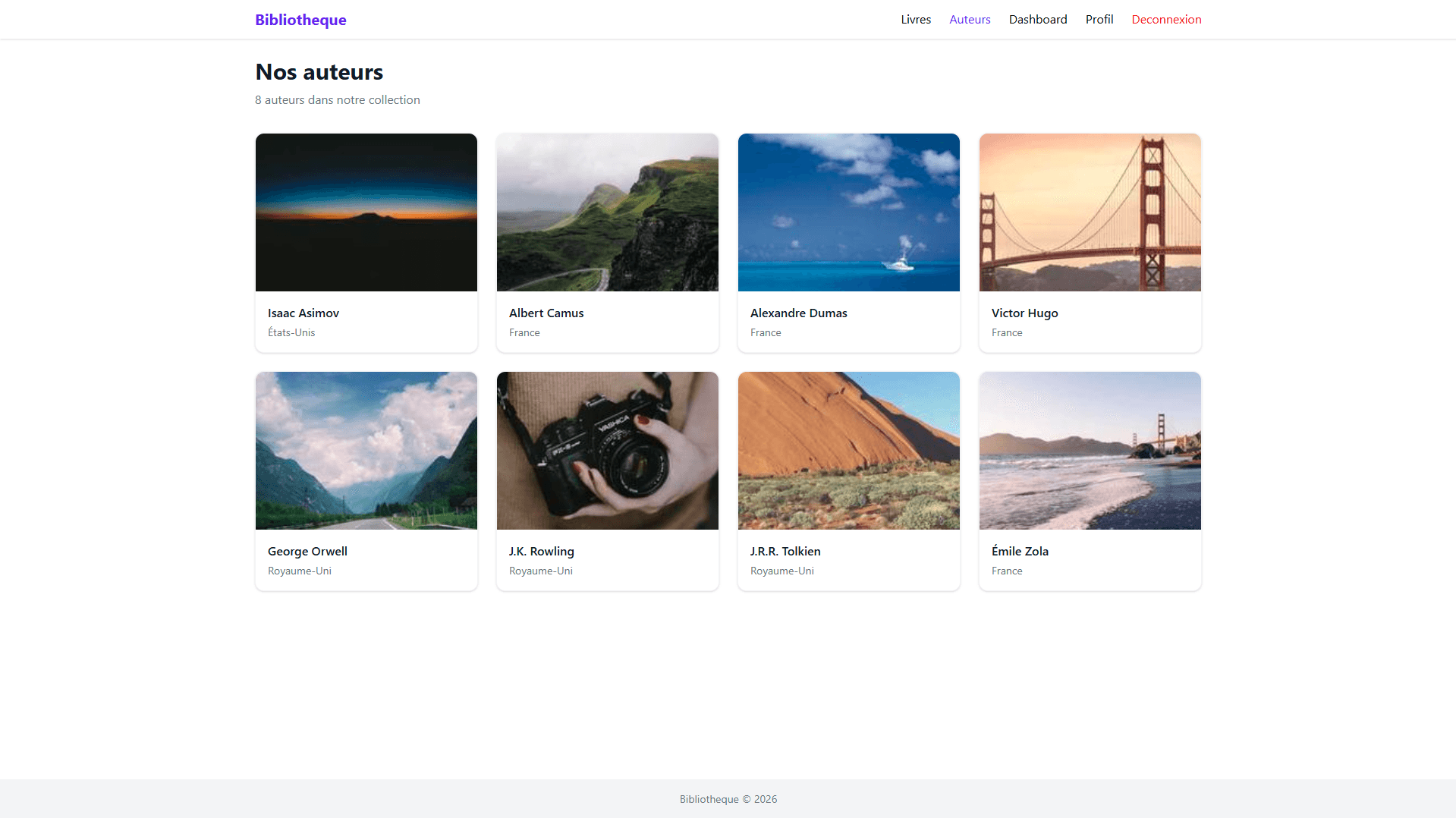
- Phases 1-2 (Foundation & Core): paginated catalog, author pages, integrated multi-criteria search, JWT authentication with an interceptor and guards;
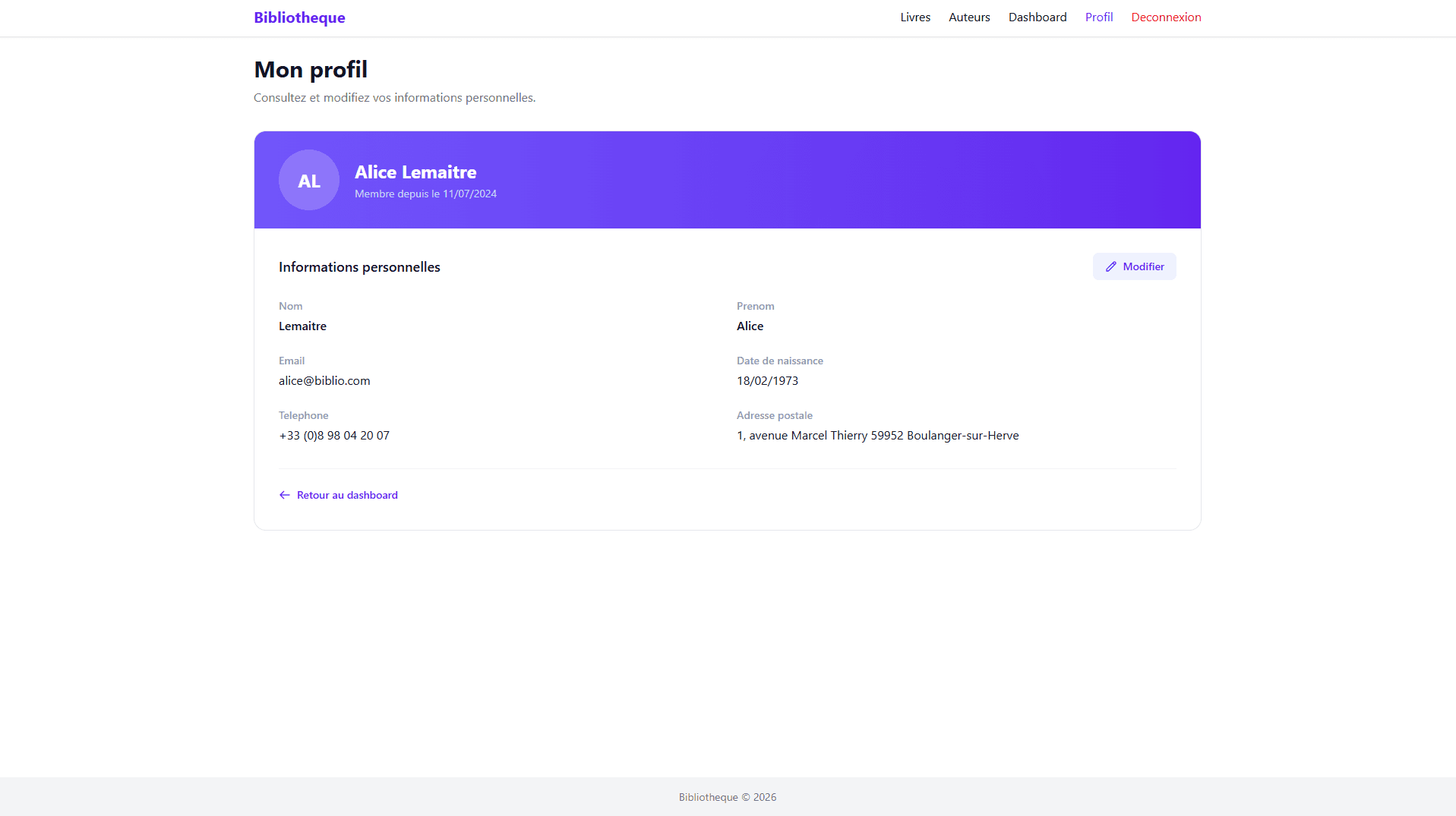
- Phase 3 (Business features): member dashboard with loans and reservations, profile page, reservation system with user feedback;
- Phase 4 (Polish): reservation cancellation, responsive design, UX feedback (spinners, empty states, error messages);
- Phase 5 (Acceptance): integration tests, technical documentation, acceptance test plan.
This organization made it possible to manage the dependencies between the front office and the REST API: each front-end phase matched endpoints delivered by the backend team.
Technical highlights
Frontend: Angular 21 with standalone components (no NgModules), signals for reactive state, inject() for DI, modern template syntax (@if, @for, @empty). Routing with lazy loading and authentication guards.
REST API: Symfony 7.4 with API Platform exposing public endpoints (catalog, authors, search) and protected ones (profile, loans, reservations). JWT authentication through LexikJWTBundle, serialization groups to control the responses.
Database: MariaDB with Doctrine ORM. 6 entities (member, book, author, category, loan, reservation) and ManyToMany/ManyToOne relations. Business rules in the database: max 5 simultaneous loans, max 3 reservations, 7-day expiration.
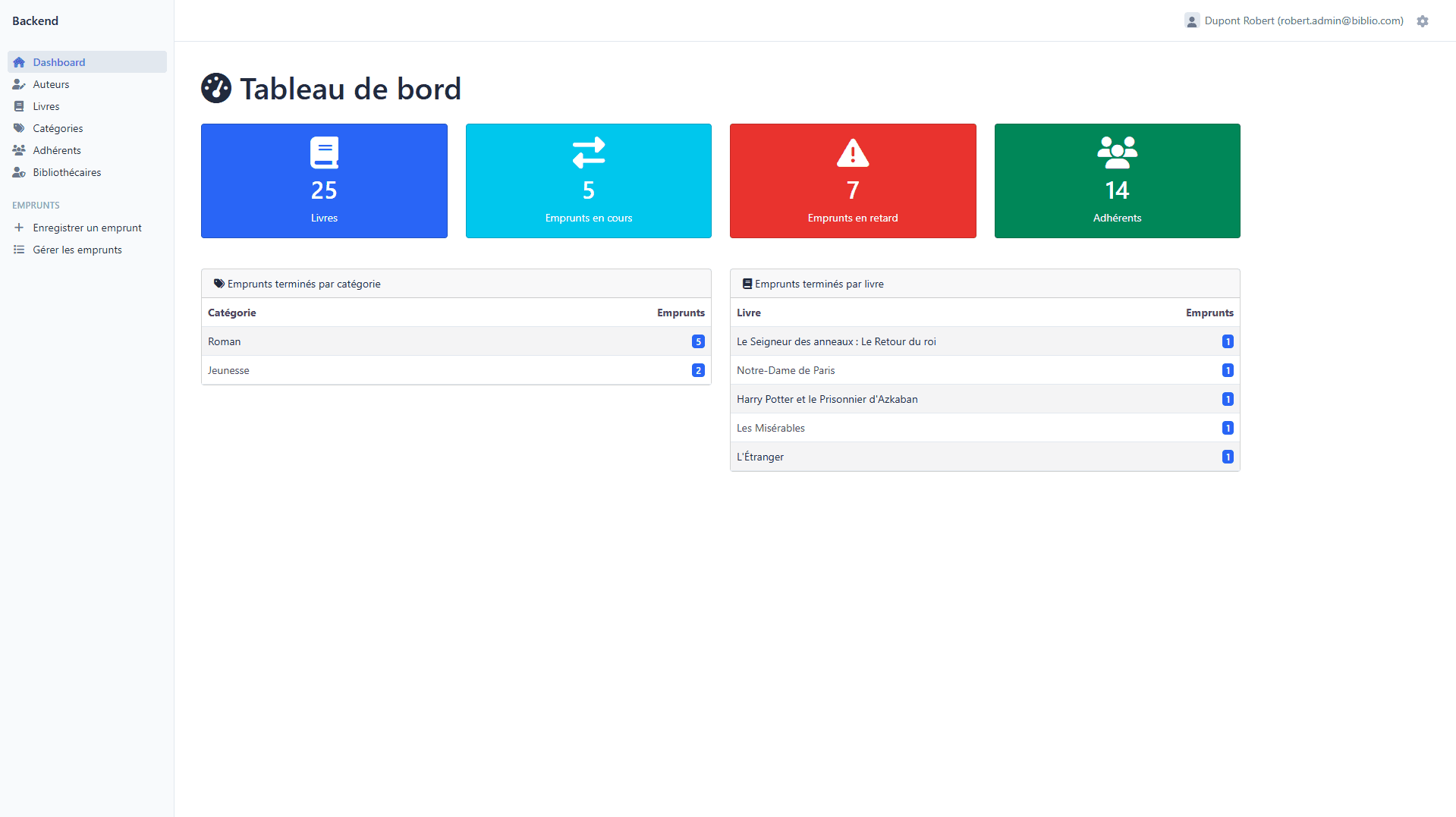
Back office: EasyAdmin 4 with a statistics dashboard (current/overdue loans, books by category), full CRUD, complex forms for loans and returns, role management (librarian/manager).
Security: JWT tokens with an Angular HTTP interceptor that adds the Bearer token automatically. Guards on protected routes, conditional navigation based on authentication state, handling of expired tokens (automatic logout on 401).
Results
The delivered front office covers 13 functional user stories:
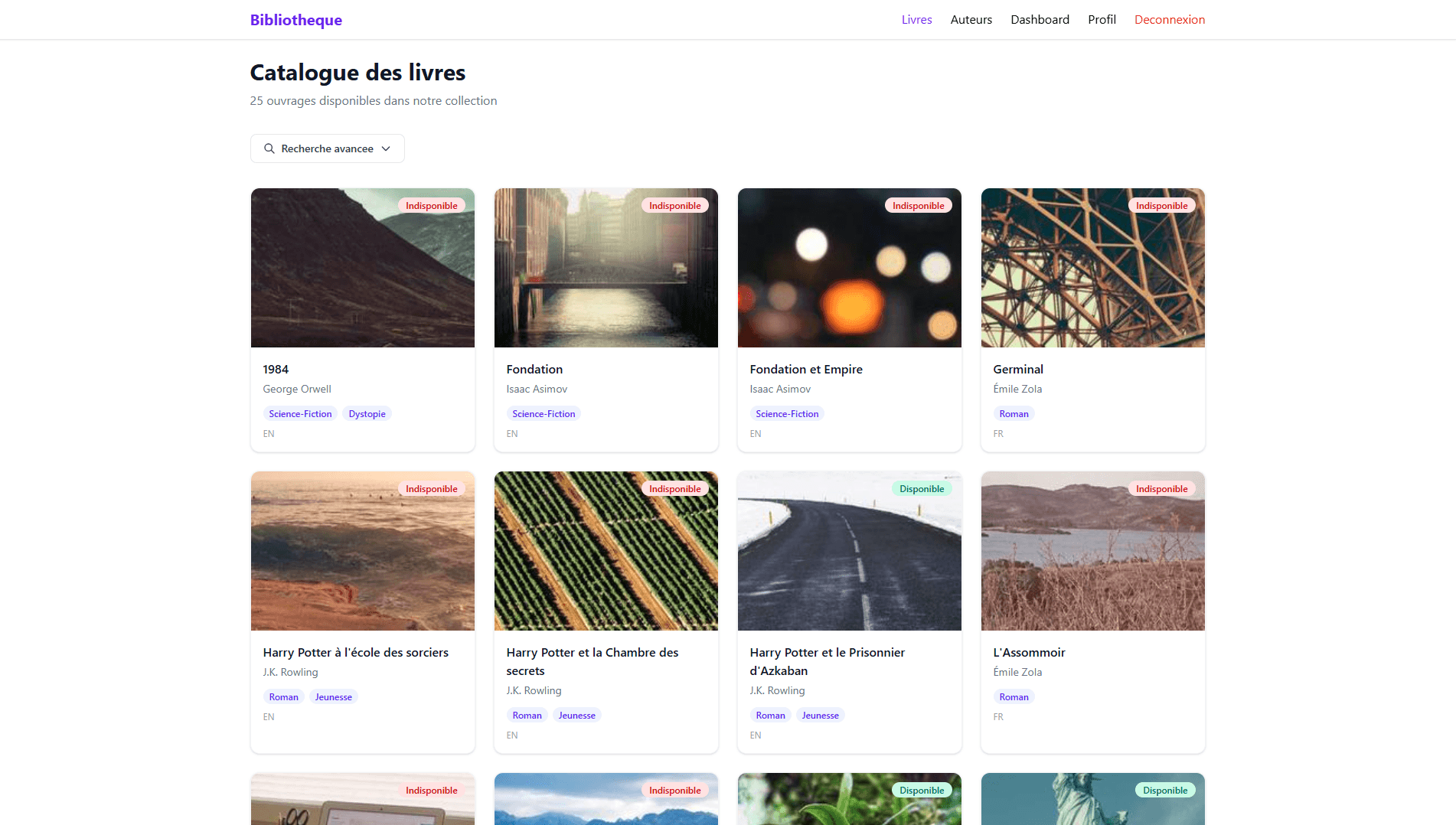
- a paginated catalog with multi-criteria search whose criteria can be combined (title, author, category, language, publication period);
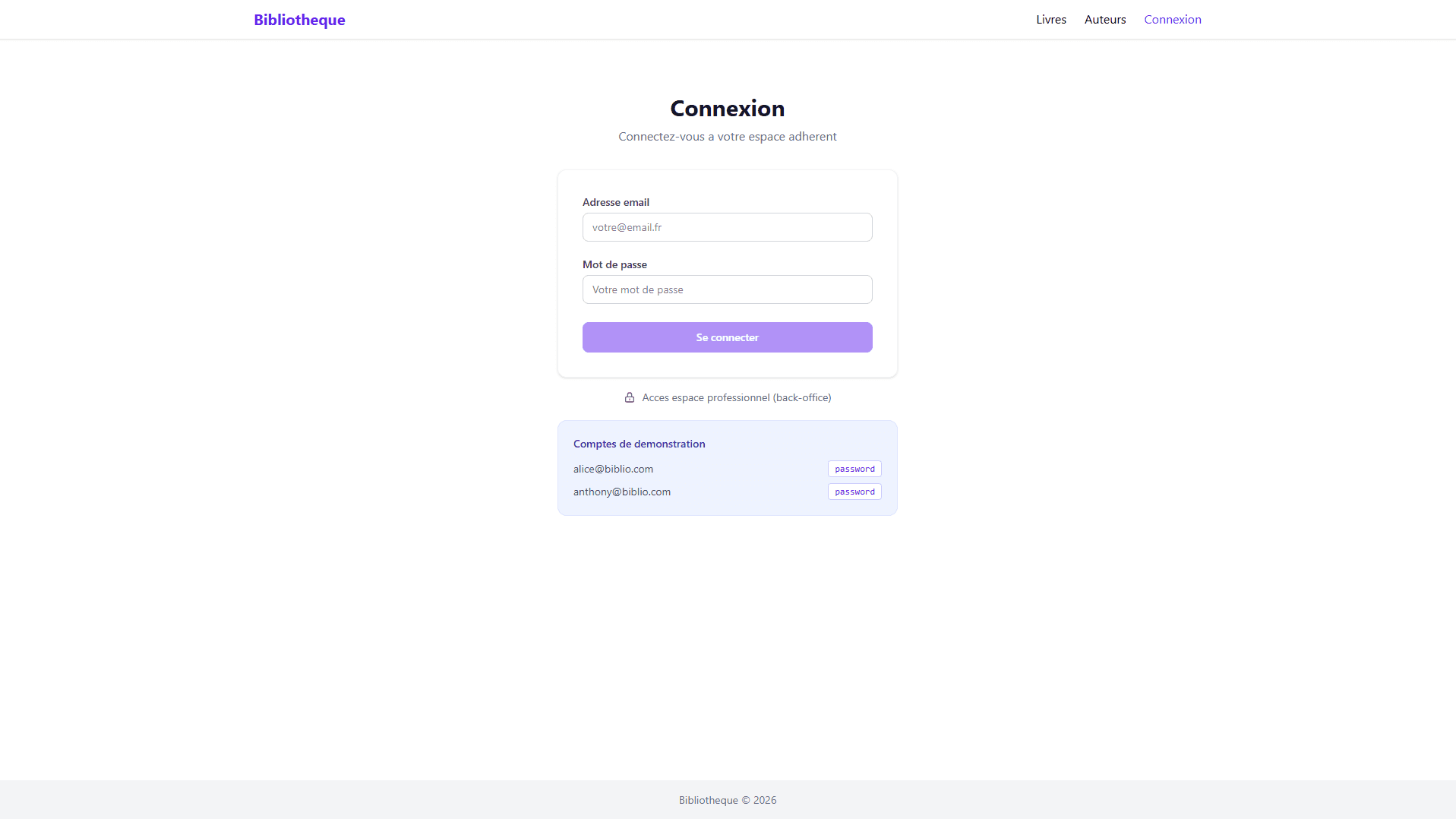
- a complete JWT authentication system: login, conditional navigation, HTTP interceptor and route guards;
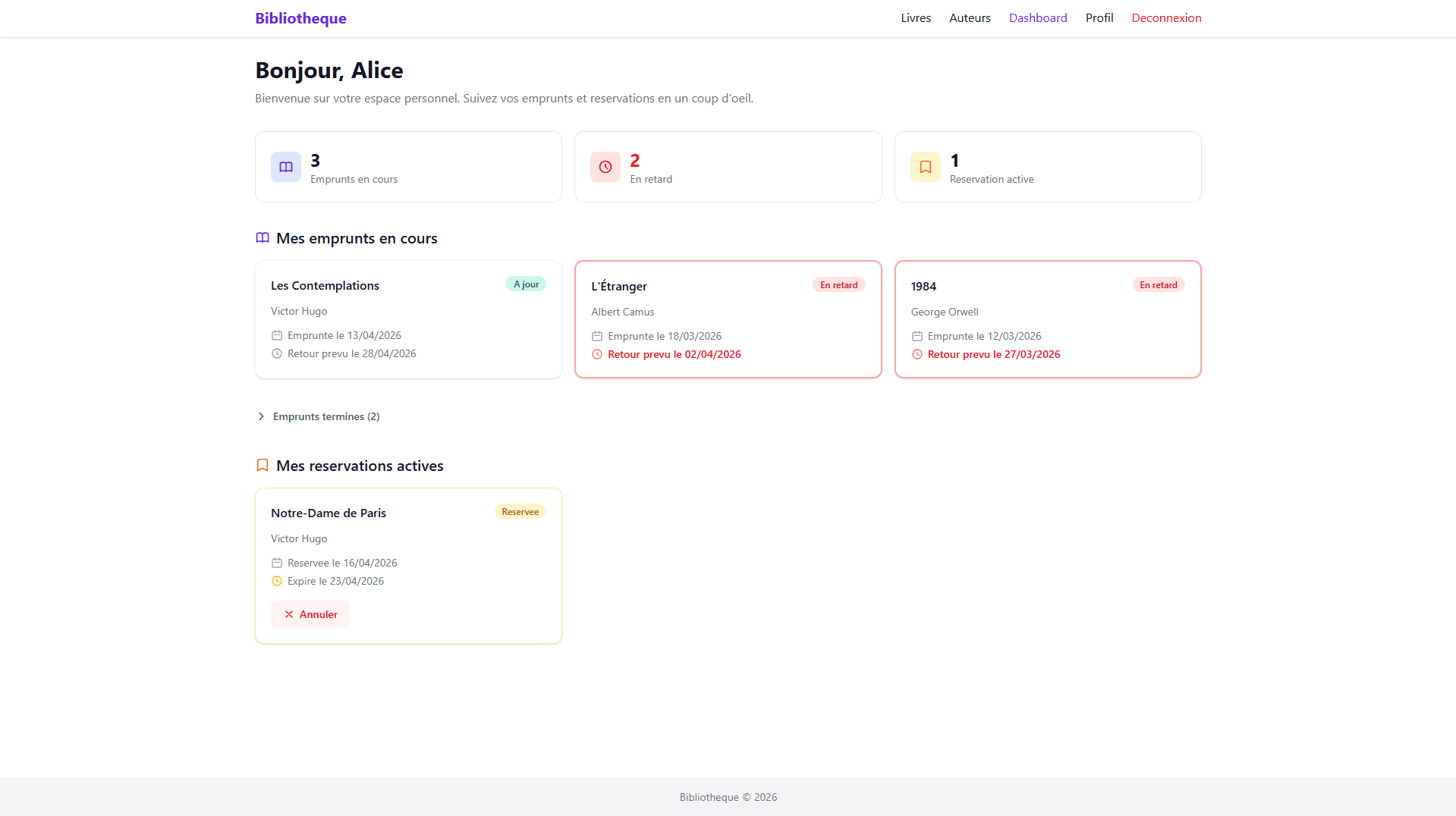
- a member dashboard showing current loans (with an on-time/overdue badge) and active reservations, with cancellation;
- detailed pages for each book and author, with an availability indicator and a contextual reservation button;
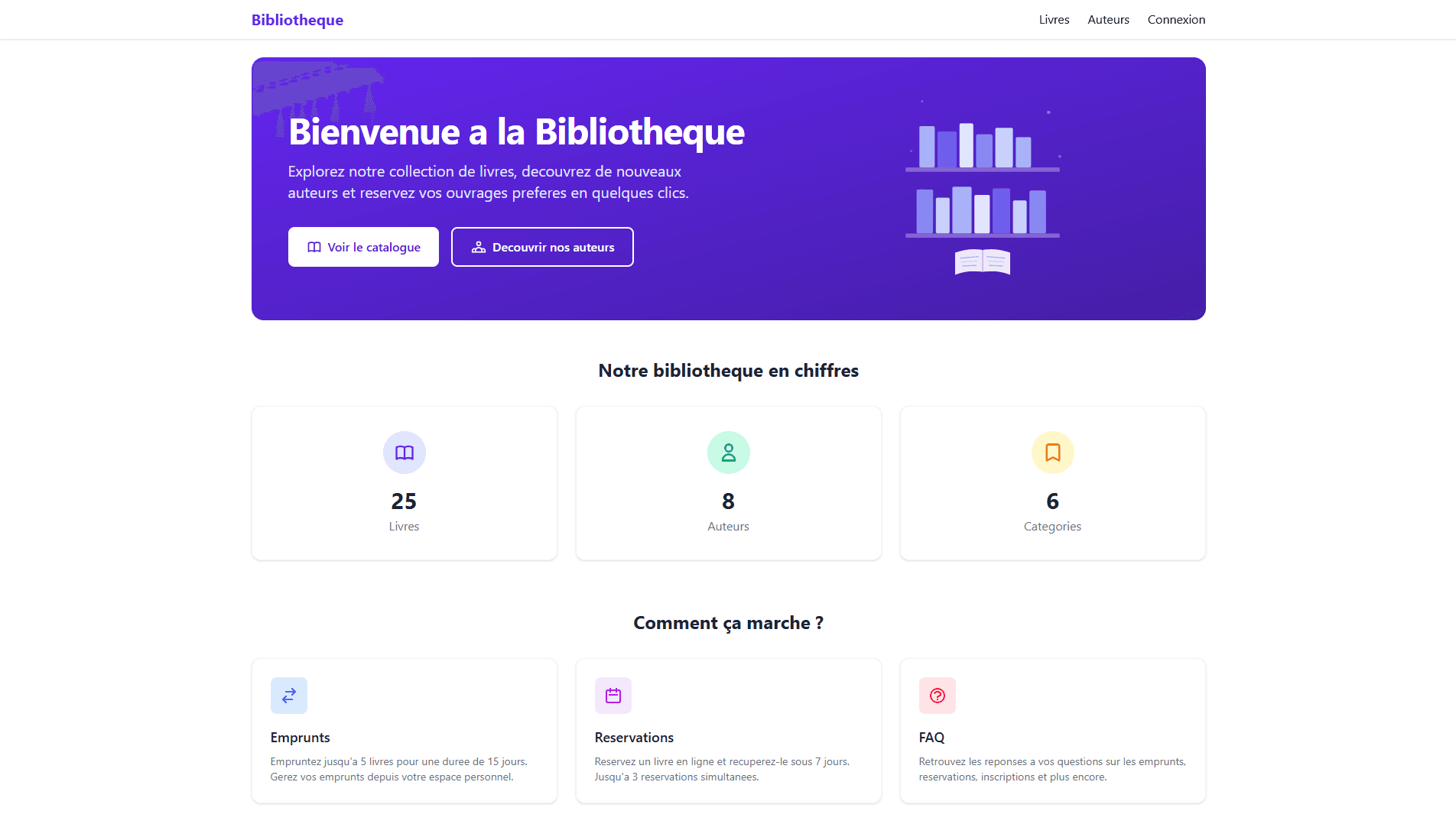
- a profile page, an FAQ and a home page with library statistics.
Together, they form a consistent platform where the Angular front office, the Symfony REST API and the EasyAdmin back office work smoothly together.
What I learned
- leading a 39-user-story project in a team of 3, with phased planning and management of dependencies between teams;
- mastering Angular 21 and its modern conventions: standalone components, signals, inject(), @if/@for template syntax;
- integrating a JWT-secured REST API into an Angular frontend (interceptor, guards, token handling);
- implementing complex business rules on the API side (loan limits, reservations with expiration, availability);
- coordinating work between the front office, the API and the back office with clear synchronization points.
This project let me combine technical skills and leadership. Managing a team while developing the front office taught me to prioritize, communicate and deliver on time.