Case study
TinyTroc - Second-hand baby gear marketplace
Context
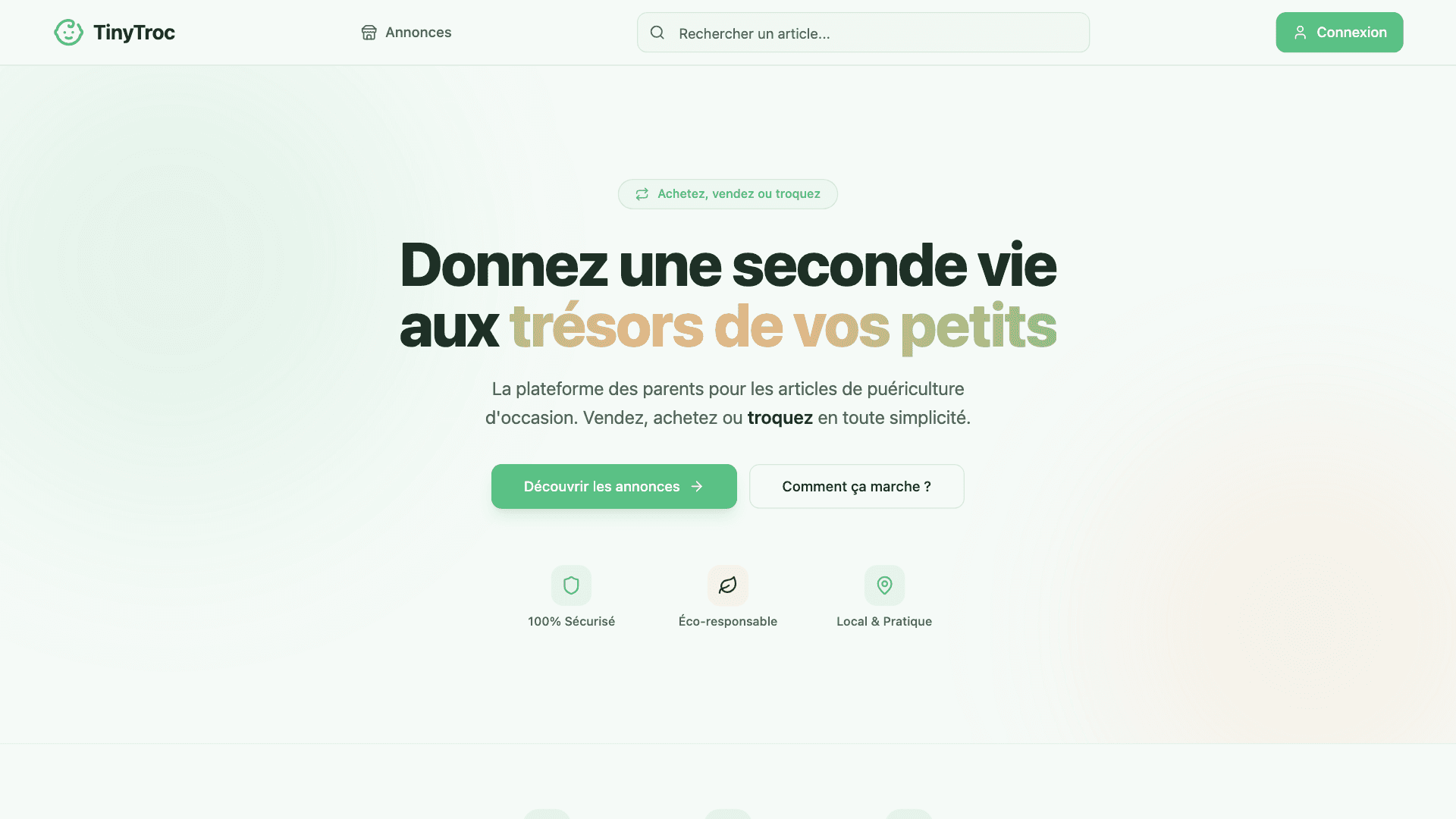
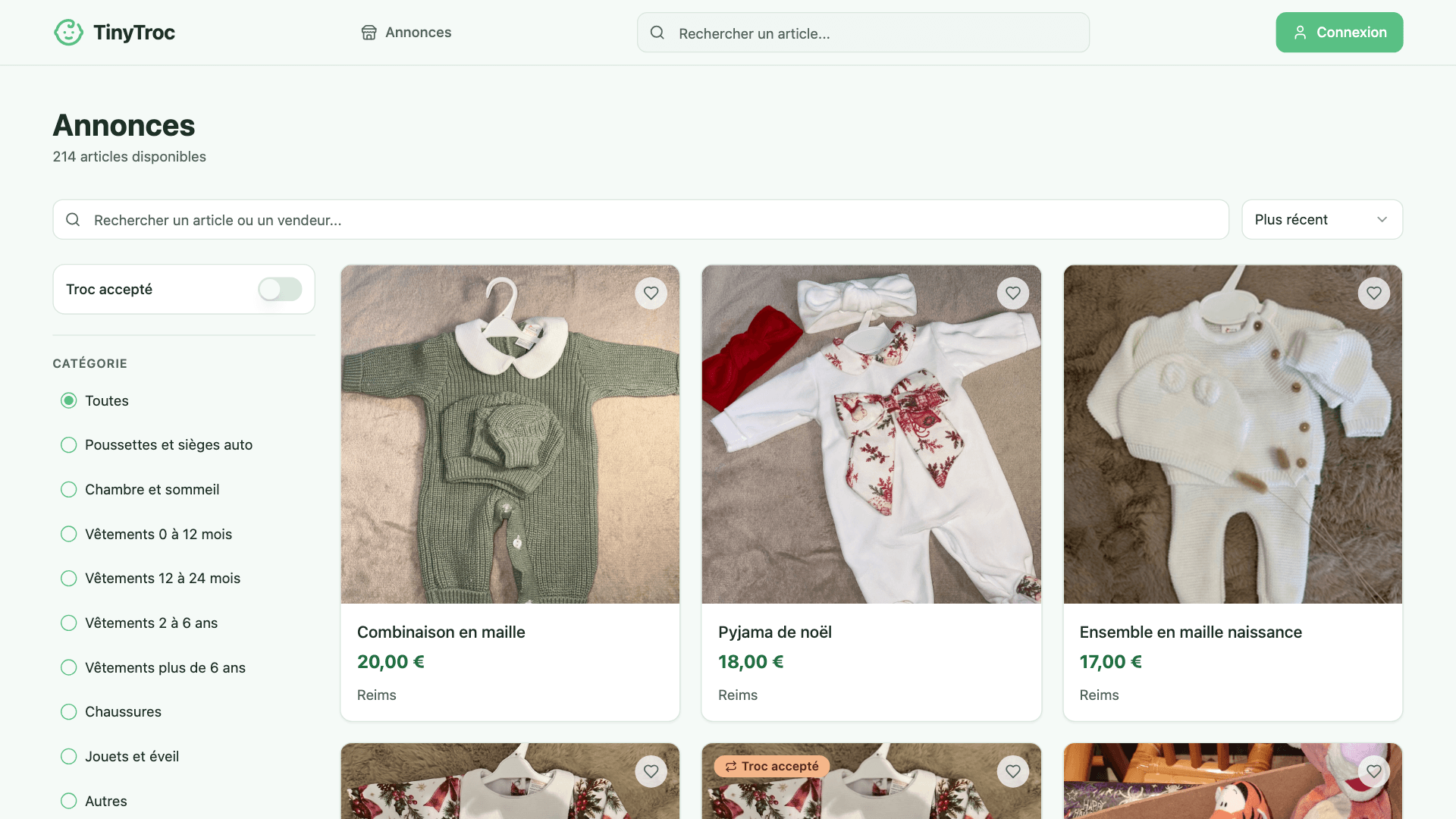
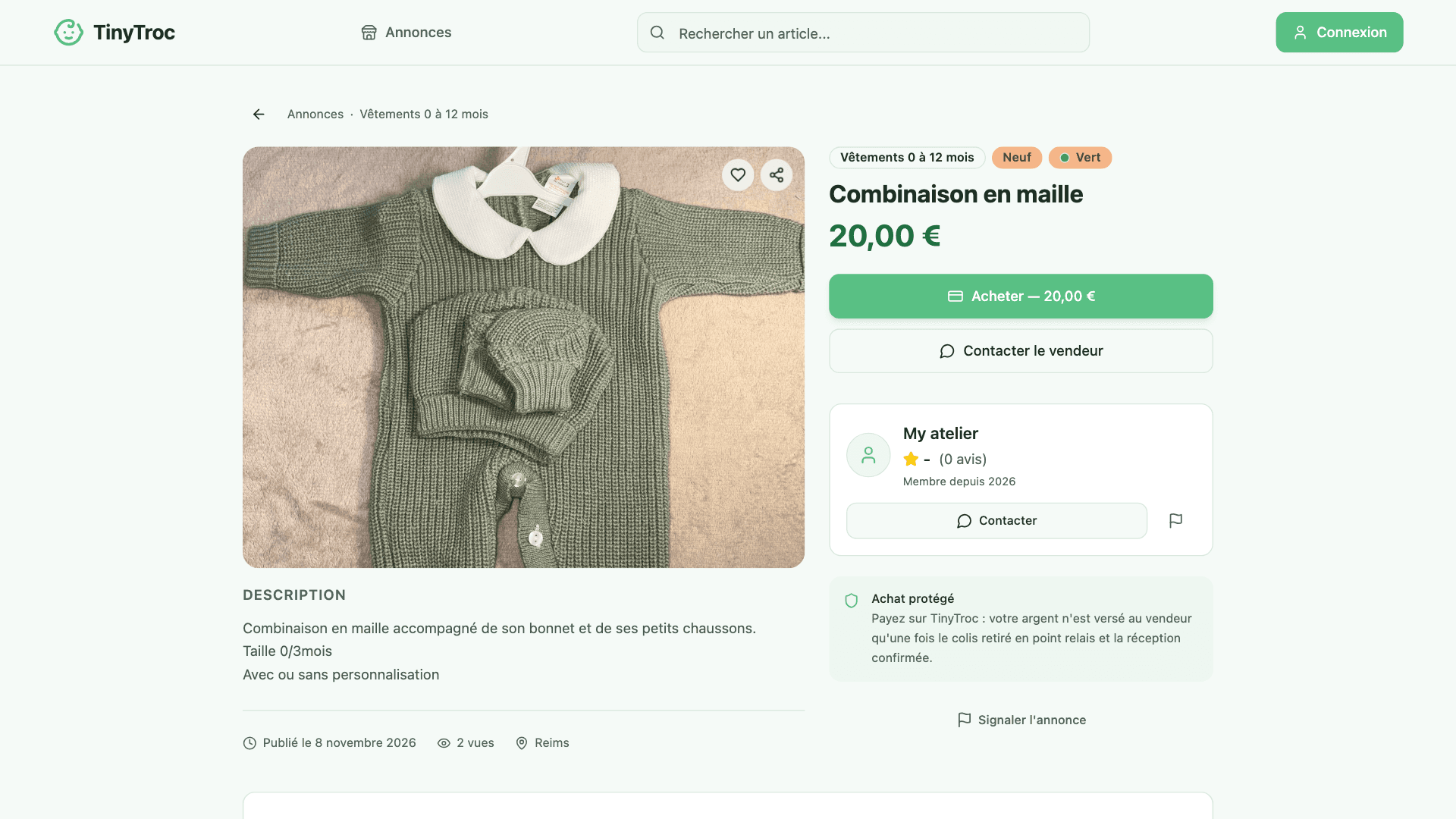
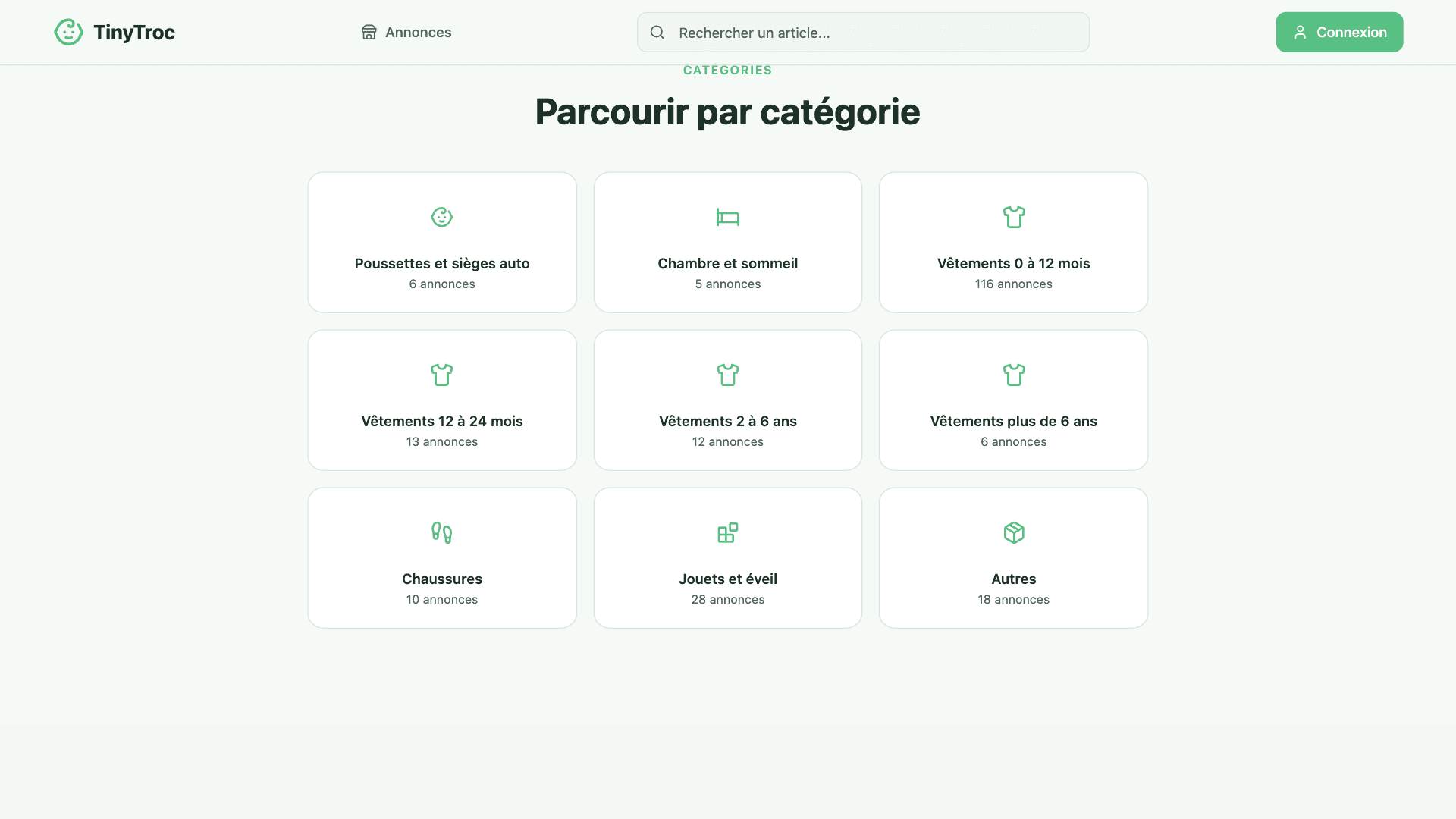
TinyTroc is a marketplace for second-hand baby gear between parents: strollers, clothes, toys, nursery equipment. Its founder had built a prototype with Lovable, an AI app generator. The screens existed (catalog, listing page, posting, messaging, profile), but nothing was ready for real payments or real parcels.
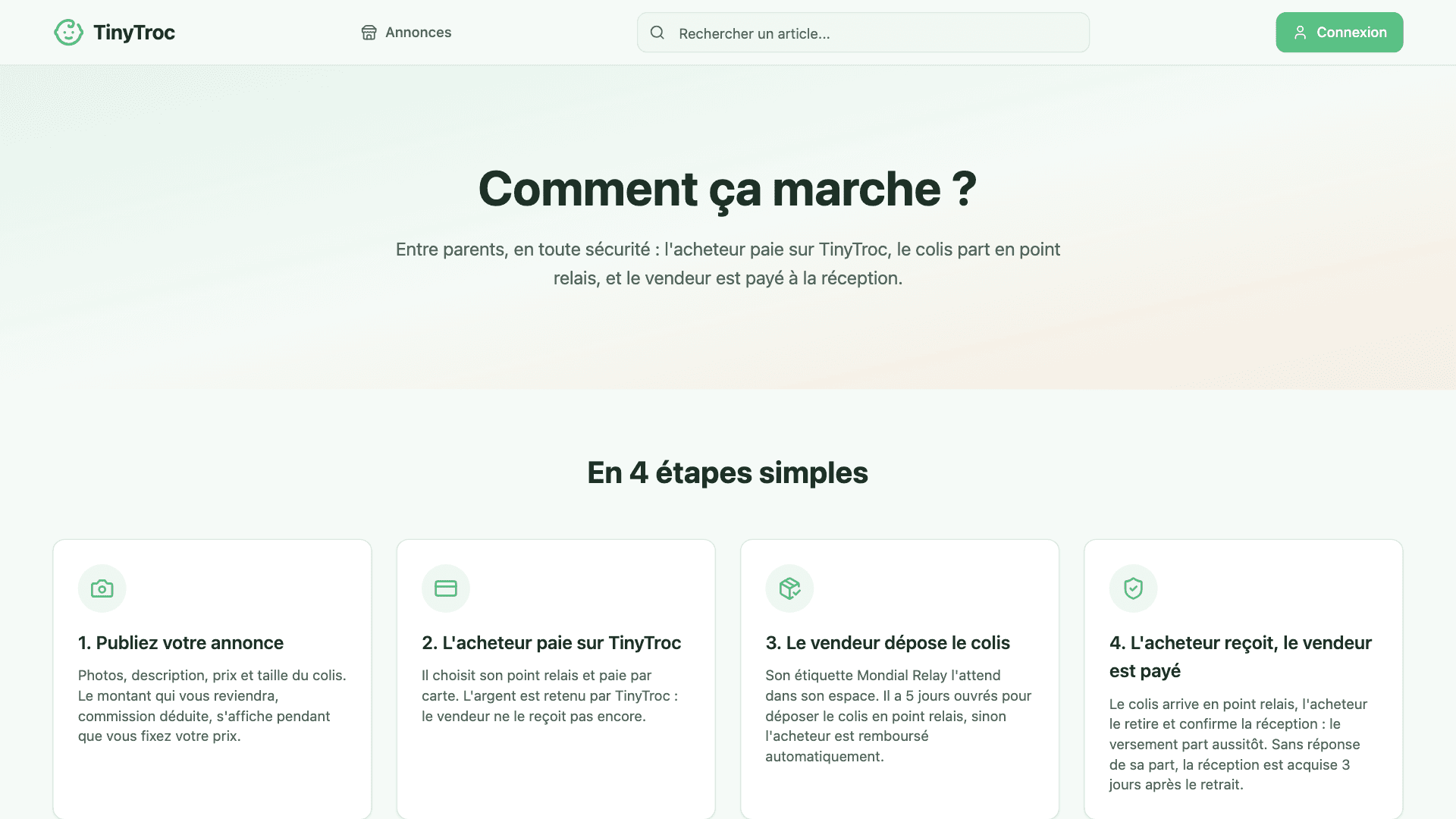
The mission: turn it into a platform ready to operate, where the buyer pays by card, the money stays held until the parcel is received and the seller is paid afterwards. All of it on a server in the client's name, with every access handed over.
Problem & goals
Problem
- Amounts were calculated in the browser, so the buyer could change them before paying
- The database access rules allowed reading and changing more than necessary
- Nothing made it possible to hold the money until delivery, even though that is the promise that reassures people buying from each other
- Shipping was simulated: no real pickup point, no label, no tracking
- Everything depended on Lovable, from the hosted database to the emails, down to the prototype's domain hard-coded in the pages: for Google, every page declared itself a copy of the prototype's home page
Goals
- Take real card payments, hold the money until delivery, then pay it out to the seller
- Connect real pickup-point shipping: choice of point, label for the seller, automatic tracking
- Leave no sensitive write to the browser: orders, payments and labels go through the server
- Give the founder a back office to track orders, members and revenue
- Make every listing findable on Google
- Put everything in the client's name, and leave the client everything needed to run the platform alone
Approach
I started by auditing the prototype, then wrote the production plan: 56 tickets, from security fixes to the handover of access. I then ran the project end to end: back-end overhaul, server, real integrations, exchanges with the client, launch and follow-up.
- keep the prototype's screens and rework everything you can't see: data, permissions, money, parcels;
- let only the server touch the money: amounts recalculated and locked when the order is placed, Stripe as the single source of truth for payments;
- hold the funds on the platform (Stripe Connect, separate charges and transfers) and pay them out to the seller only once delivery is confirmed, or automatically after a set period;
- drive orders with a state machine that logs every step, with scheduled jobs for parcel tracking, deadlines and retrying failed transfers;
- isolate the carrier behind a common interface: a simulator for tests, Mondial Relay and Sendcloud for real, adjusted to the account's actual responses;
- self-host Supabase on a server in the client's name rather than taking out a subscription in my name, to keep the promise of handing over access;
- run three audits (security, UI/UX and SEO), each followed by its fixes;
- deliver the client's feedback in small updates, then switch to live payments in a single step.
Every decision is recorded in the repository handed over to the client, along with the procedures to run the platform without me.
Technical highlights
Interface: React 18, TypeScript, Vite, Tailwind CSS and shadcn/ui. Pages load on demand. The browser reads data through the database's access rules and writes nothing sensitive.
Back end: Self-hosted Supabase: PostgreSQL with row-level access rules and scheduled jobs, authentication, storage for photos and labels, Deno server functions for everything involving money and parcels.
Payments: Stripe Checkout and Stripe Connect Express. The buyer pays the platform; the funds stay held, then are transferred to the seller. Stripe notifications are signed and processed exactly once; sellers open their payout account on their first sale.
Shipping: Mondial Relay pickup-point search, labels and tracking through Sendcloud. Tracking updates on its own; the buyer confirms delivery or reports a problem.
Emails: Brevo, for the seven transactional emails and the login emails.
Hosting: VPS in the client's name, Docker containers, Caddy for HTTPS. Hardened server (key-based login, firewall, only the API gateway exposed), daily backup with its restore procedure, instant rollback to the previous version of the site.
Quality: Vitest and Testing Library, integration tests of the access rules and server functions on a local Supabase stack, continuous integration with GitHub Actions.
Results
TinyTroc has been live since October 18, 2026, one month after the project started, with real payments:
- listing creation with photos, a catalog filterable by category, condition, price and color, search from the first letters typed, favorites;
- messaging between members, with swap proposals and offers on a bundle of items from the same seller;
- protected card payment: the money stays held until delivery, then it is paid out to the seller;
- pickup-point shipping: the seller gets a label, tracking updates on its own, the buyer confirms delivery or reports a problem;
- a back office for the founder: orders and their timeline, members, revenue, settings, and the amount that can be withdrawn to the founder's account without touching the sellers' money;
- listings that each have their own title and description for Google, and a sitemap that lists them;
- every account in the client's name, a user guide, operations documentation and the procedures for launch, backup and rollback.
In the weeks after launch, I added what real use brought to light: reporting a problem from the order, a color filter, a procedure for a stuck parcel. The client left me a 5/5 review on Codeur.
What I learned
- taking over an AI-generated prototype: keeping what works on screen, redoing everything that involves money and data;
- designing a marketplace's money flow (hold, pay out, refund) with Stripe as the source of truth;
- self-hosting Supabase and taking on its operation: backups, secrets, deployments;
- connecting real carriers, whose responses don't always match their documentation;
- breaking a project down into tickets and taking it from audit to launch;
- explaining to a non-technical client what is happening in their tool, and leaving them what they need to use it on their own.
An AI prototype saves weeks on the screens. Going to production is decided by what you can't see: money, parcels, access and backups.