Case study
Newscard - Content recommendation app
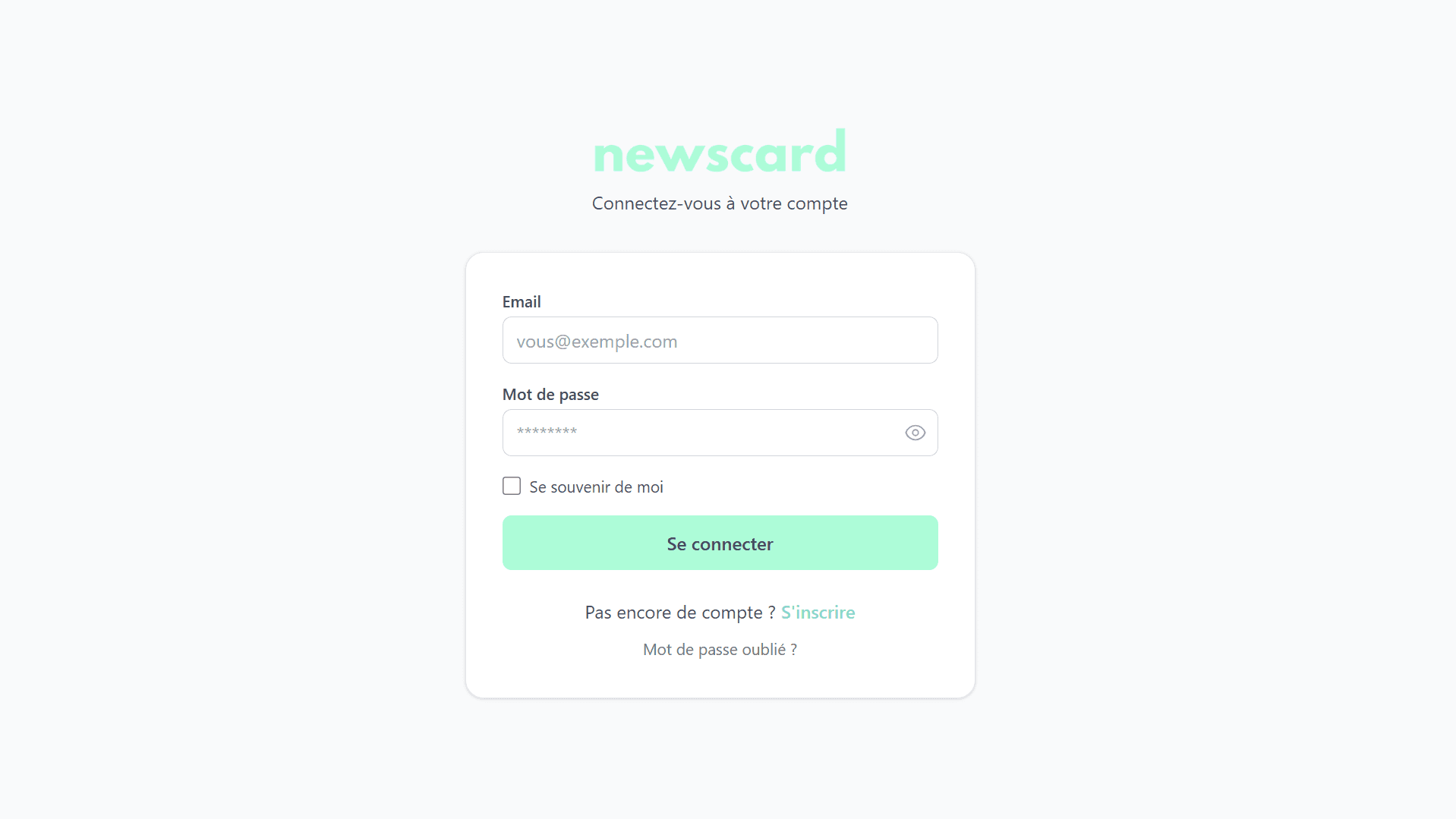
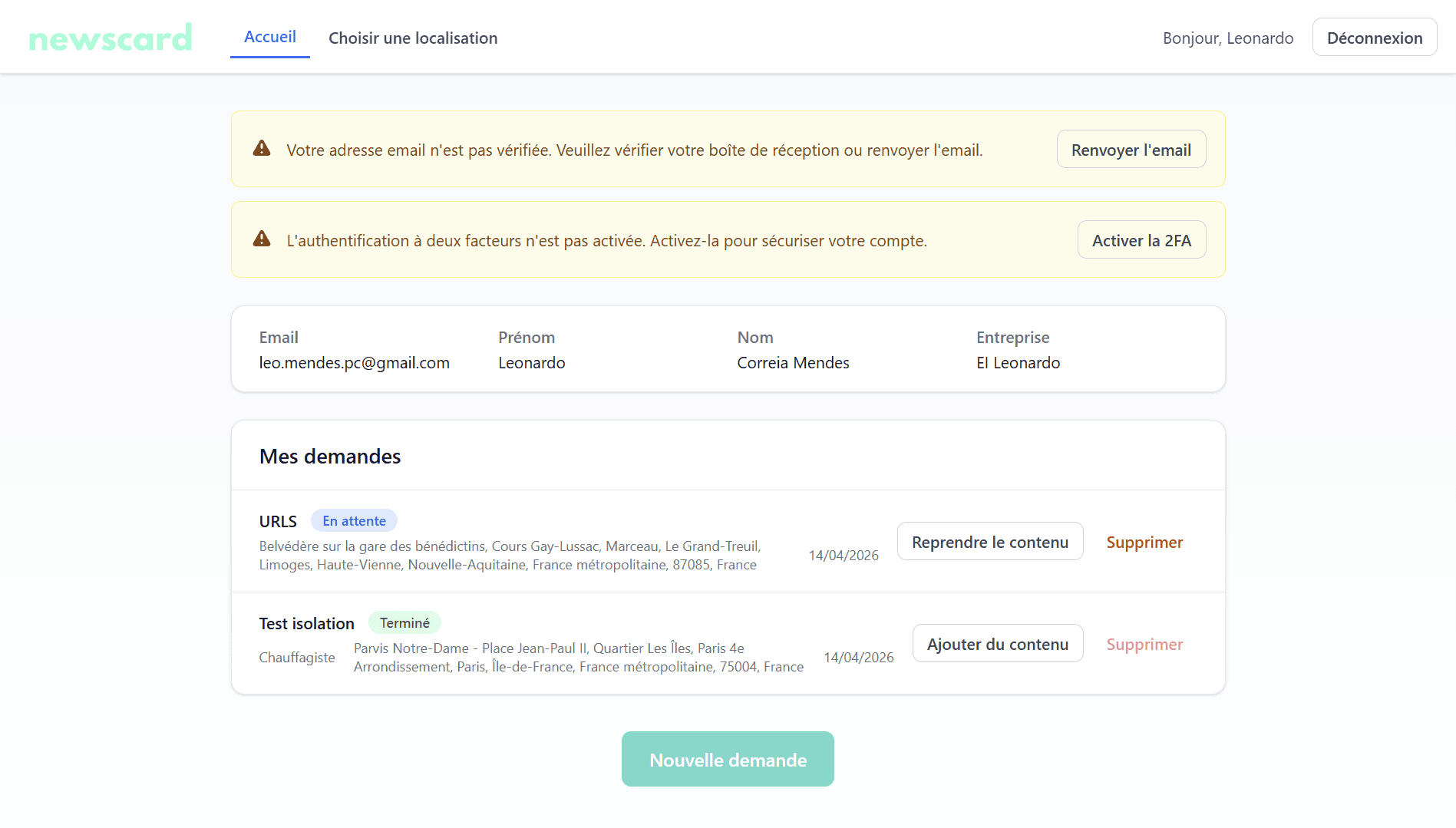
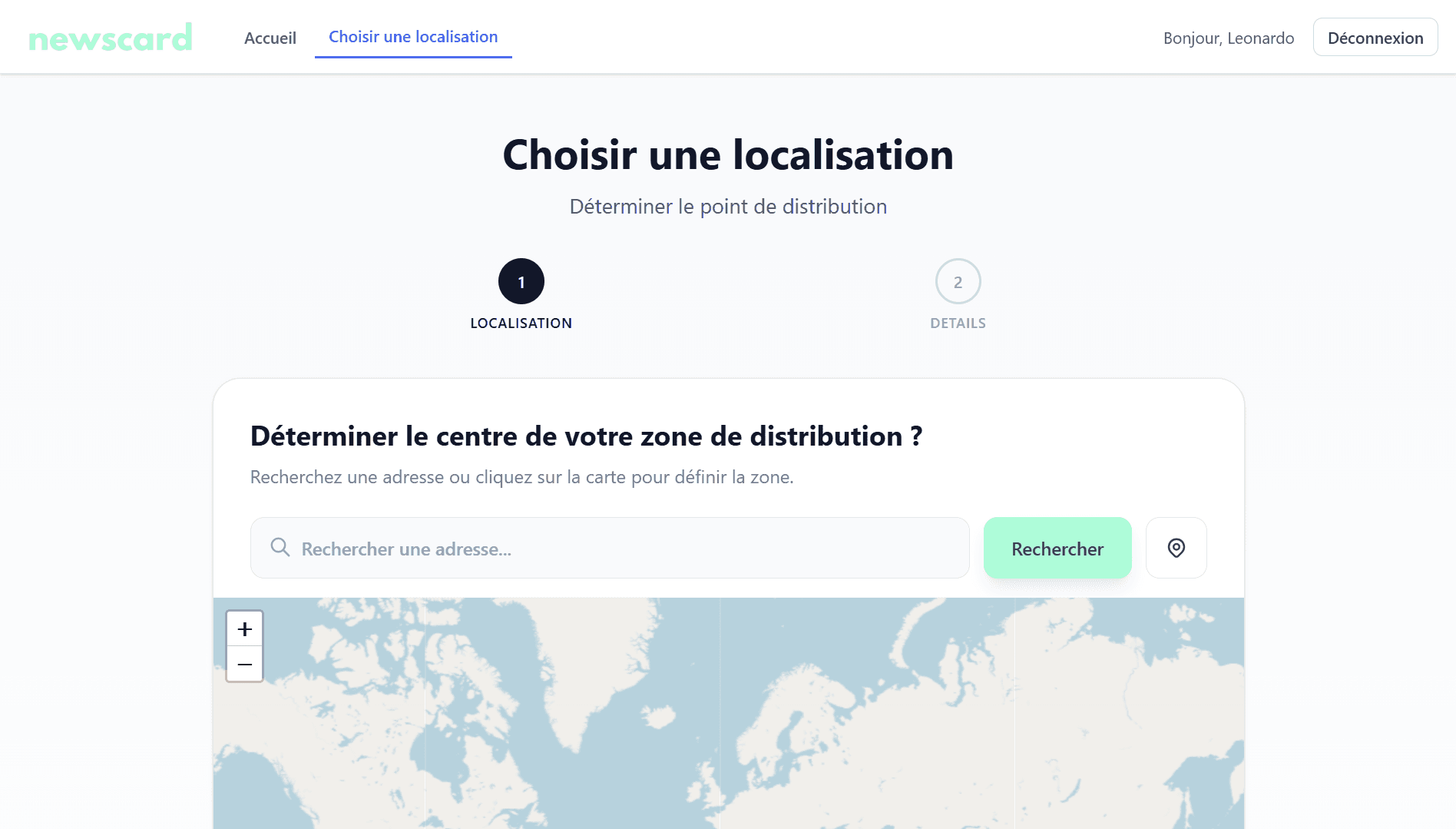
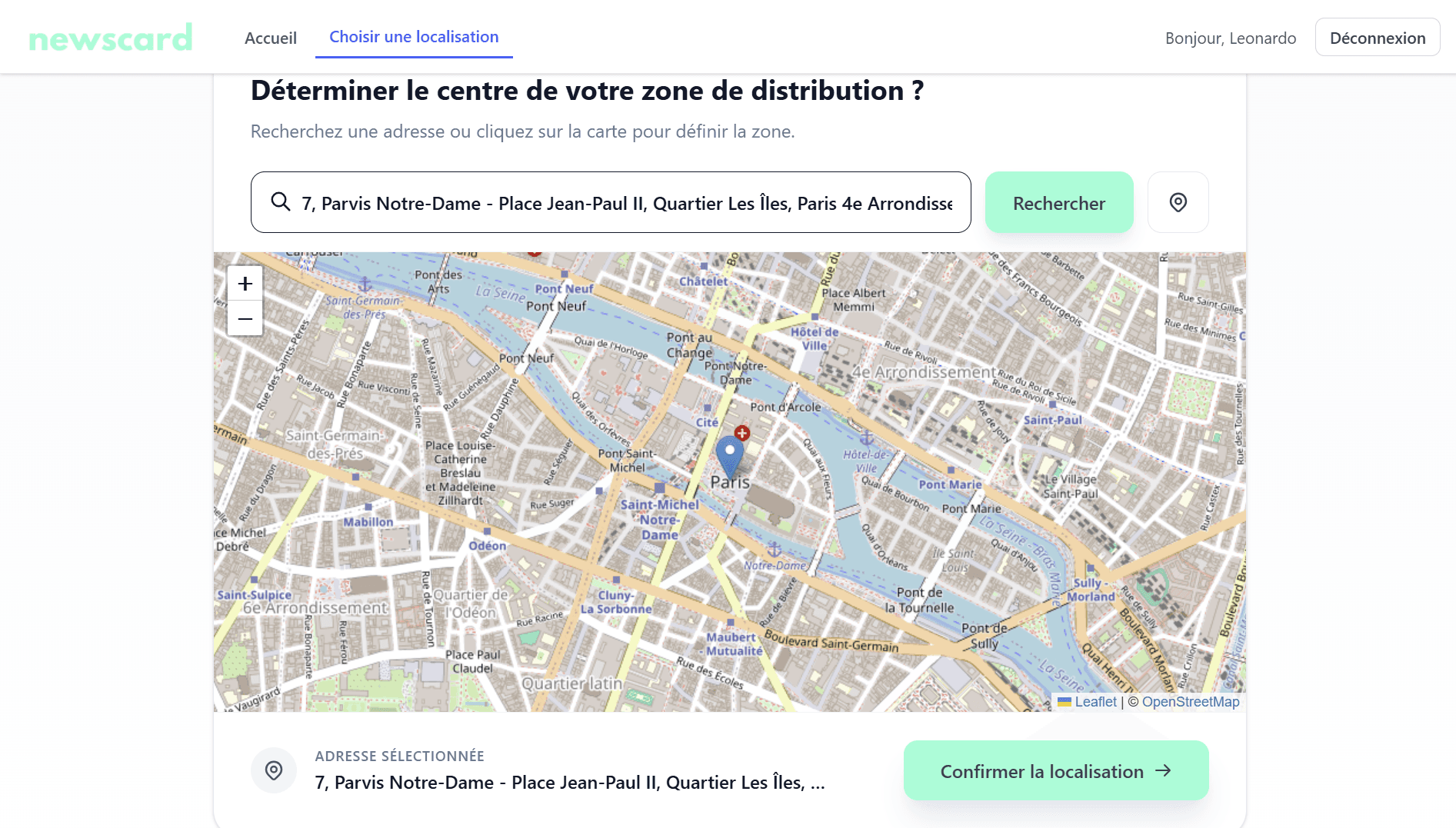
Context
Development of supplier search and automated outreach features, implementation of the front-end and back-end interfaces and of the back office. Client: Code Content Technologies.
Problem & goals
Problem
- Manual search for providers on Google Maps: slow and incomplete
- Extracting contact emails: visiting each website one by one, with information often hidden or scattered
- Writing quote requests: a repetitive task that has to be personalized for each prospect
- No existing tool combines location-based search, contact scraping and automated email sending in a single platform
Goals
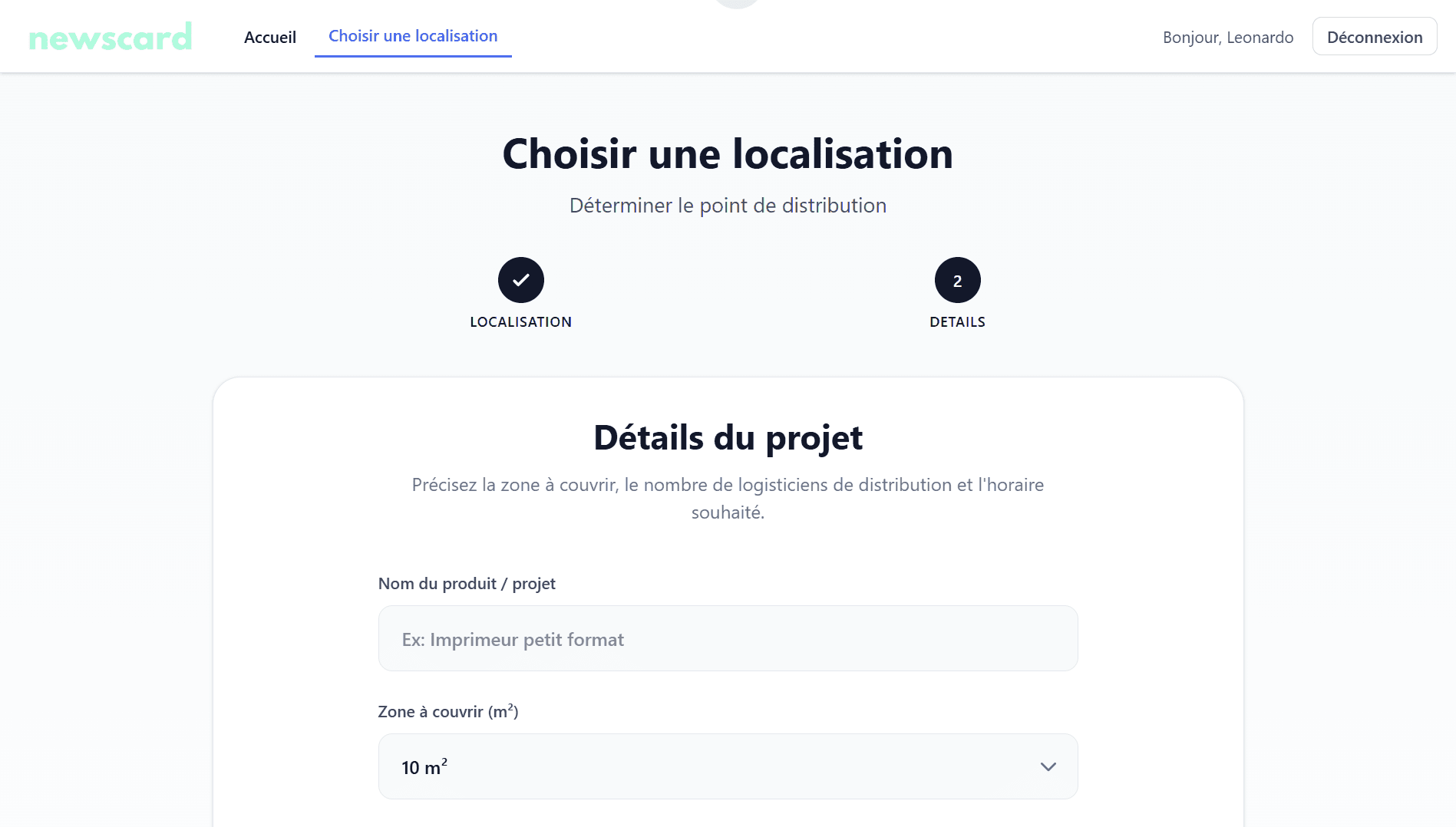
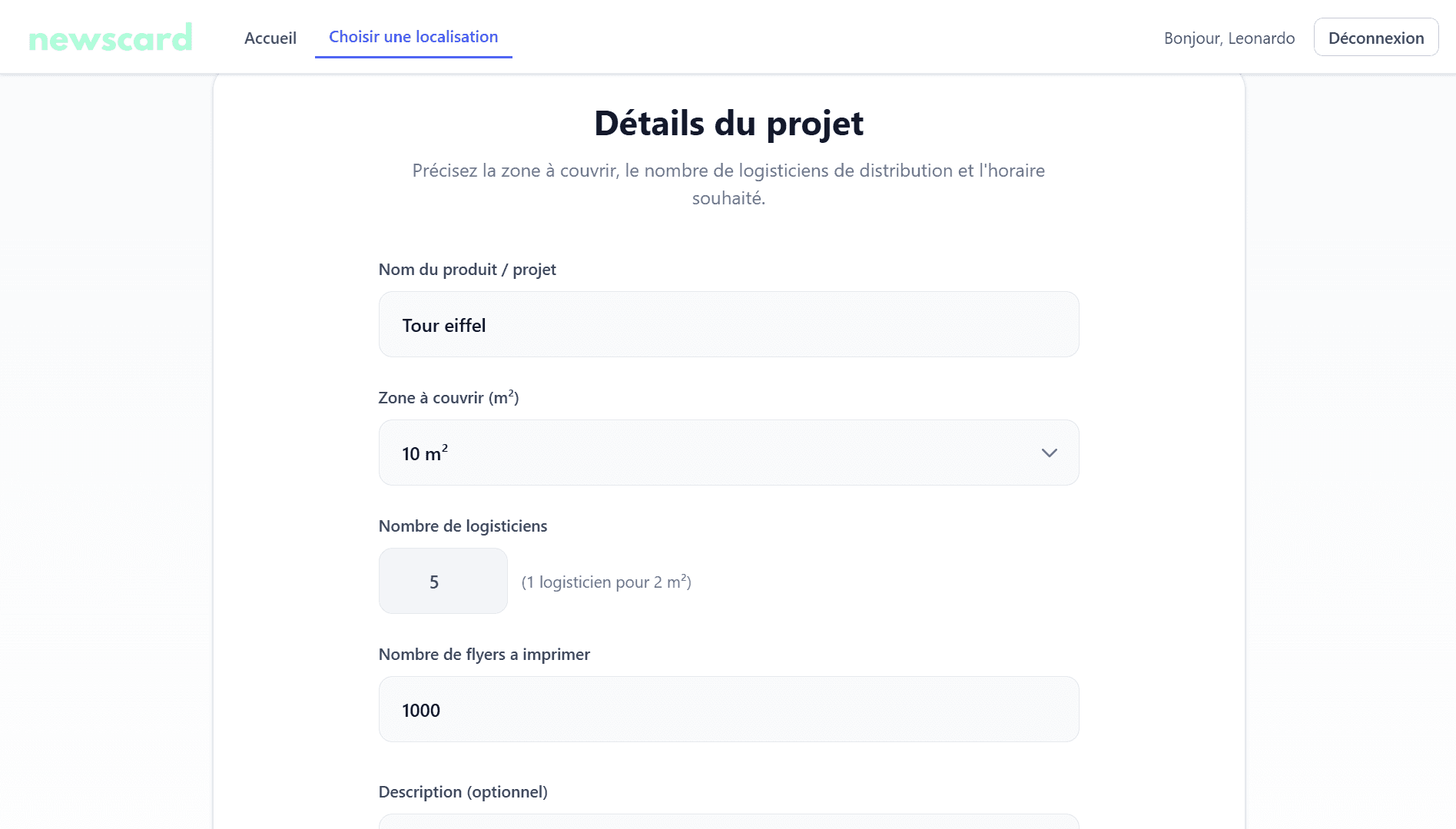
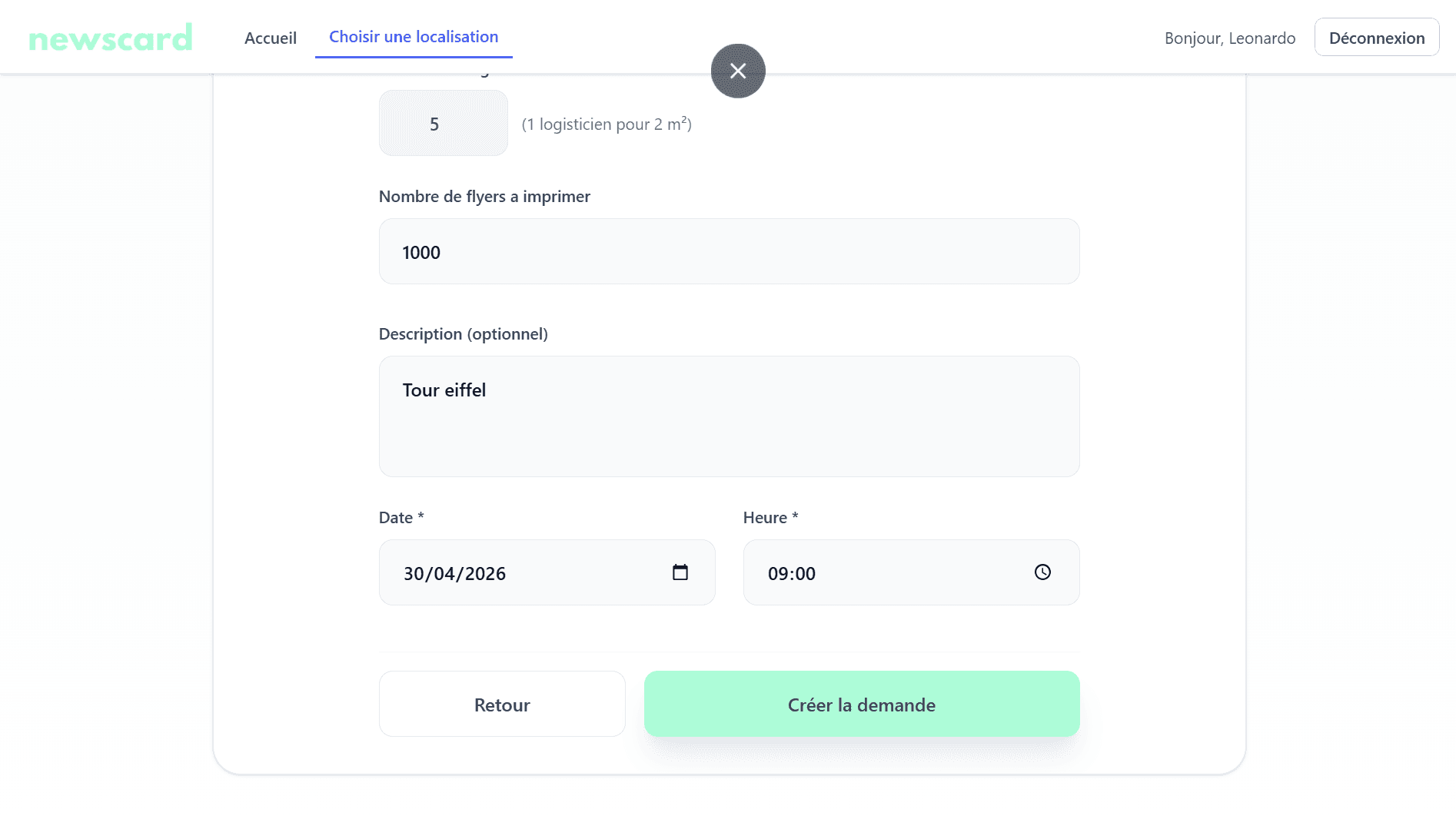
- Build a location module with an interactive map to define the search area and the needs (area, logistics providers, flyers)
- Automate the discovery of providers within a configurable radius
- Implement a multi-strategy scraper (7 methods) to extract emails with confidence scoring
- Integrate AI for content analysis and generation
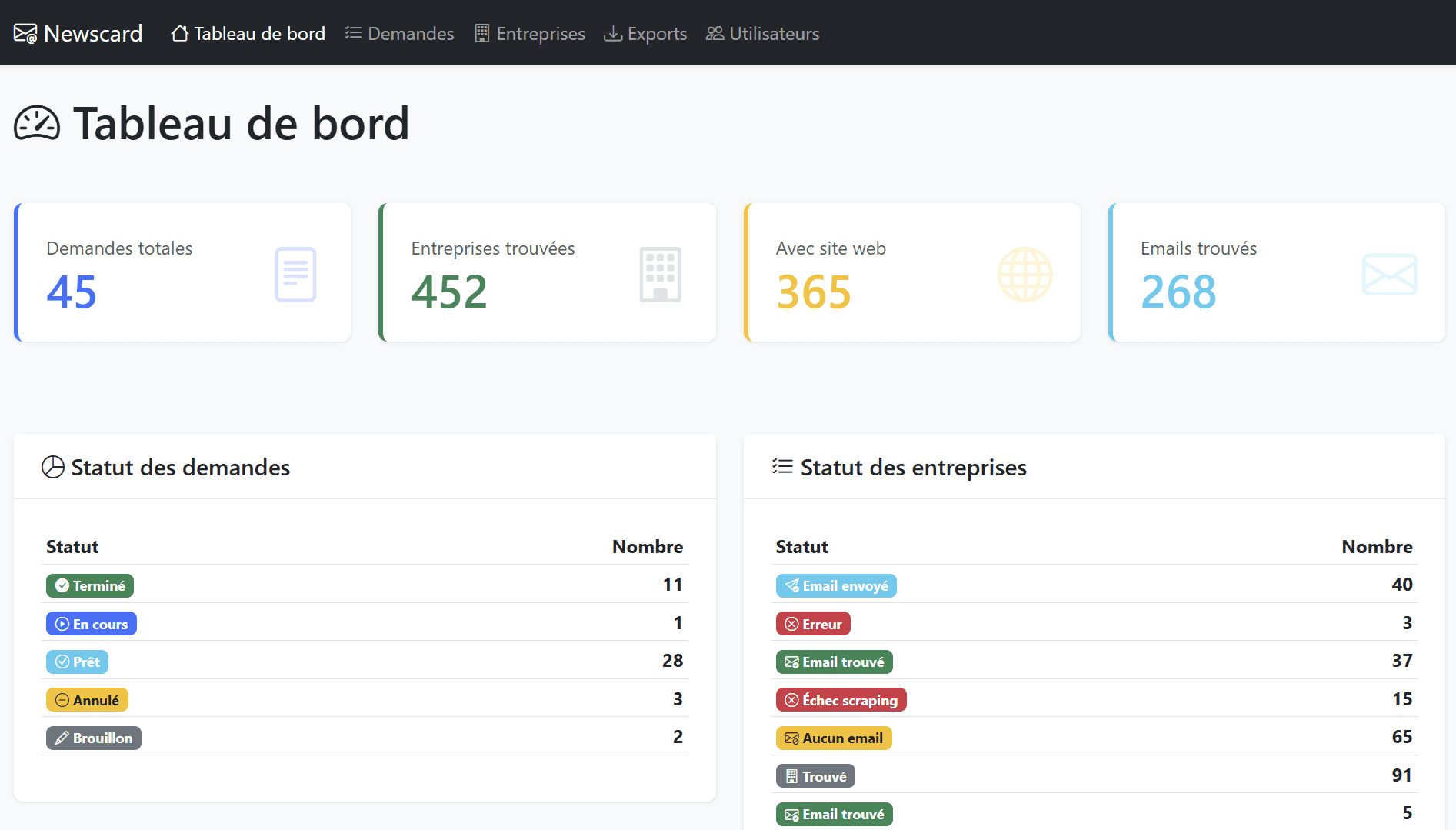
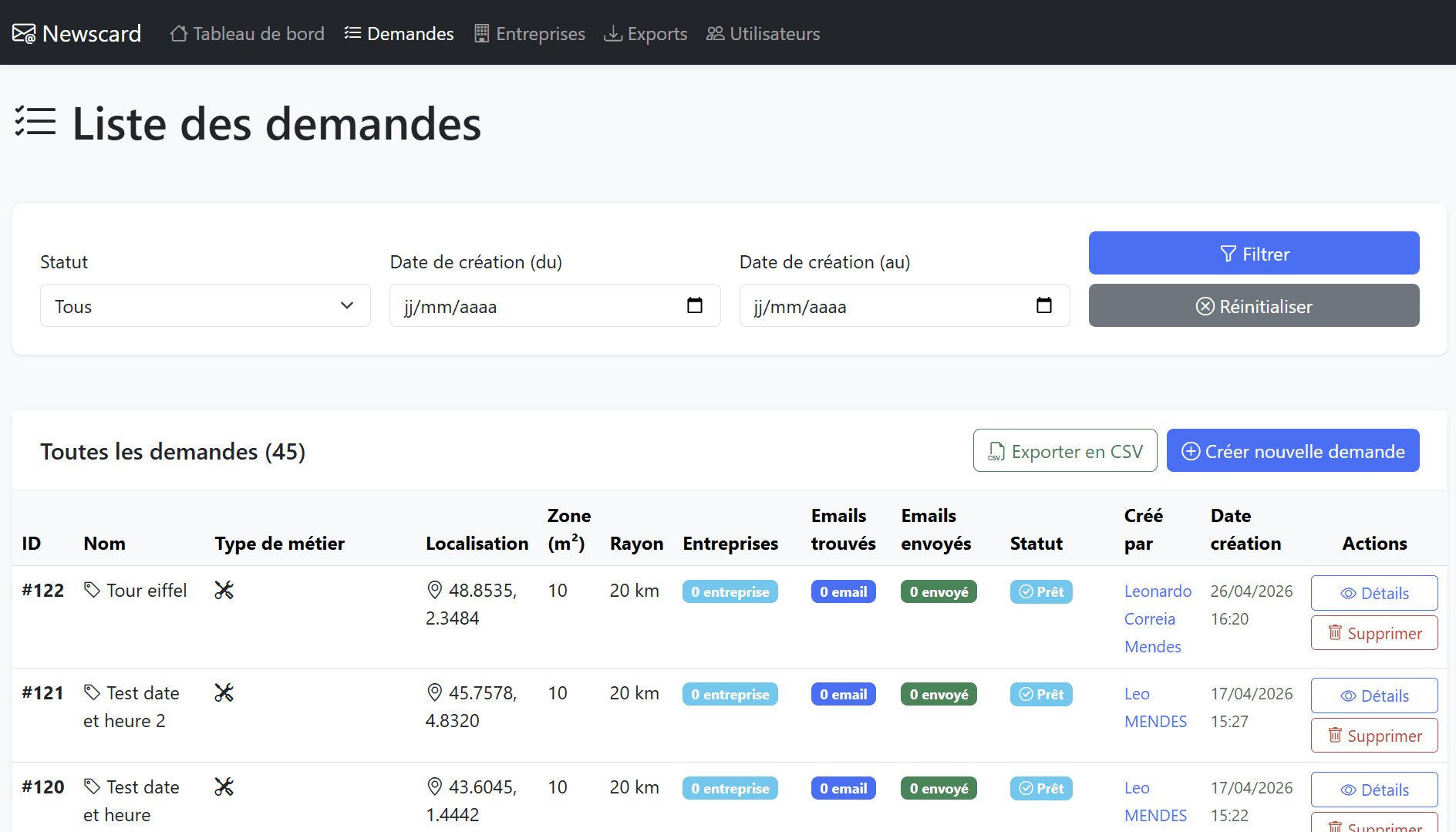
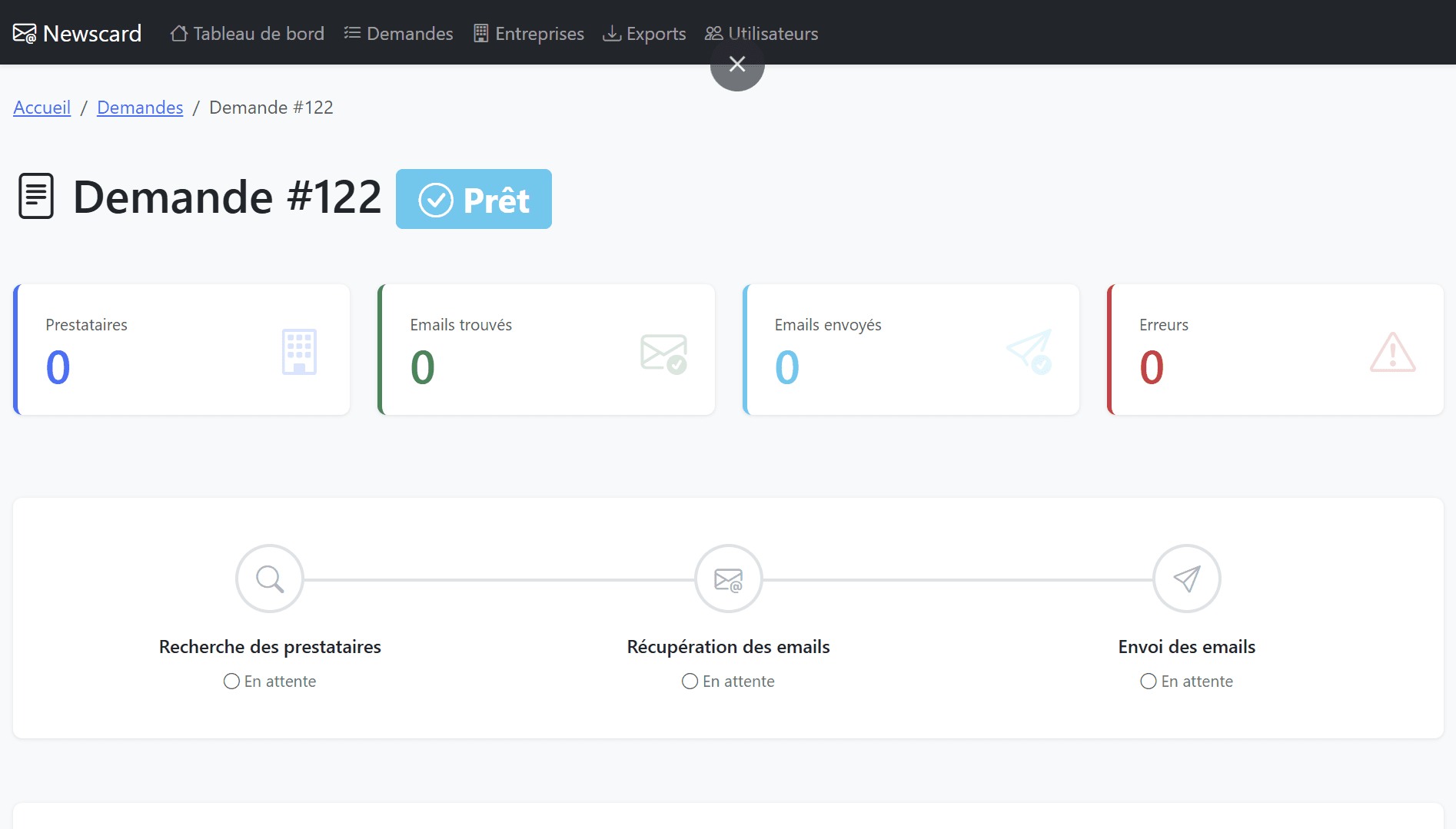
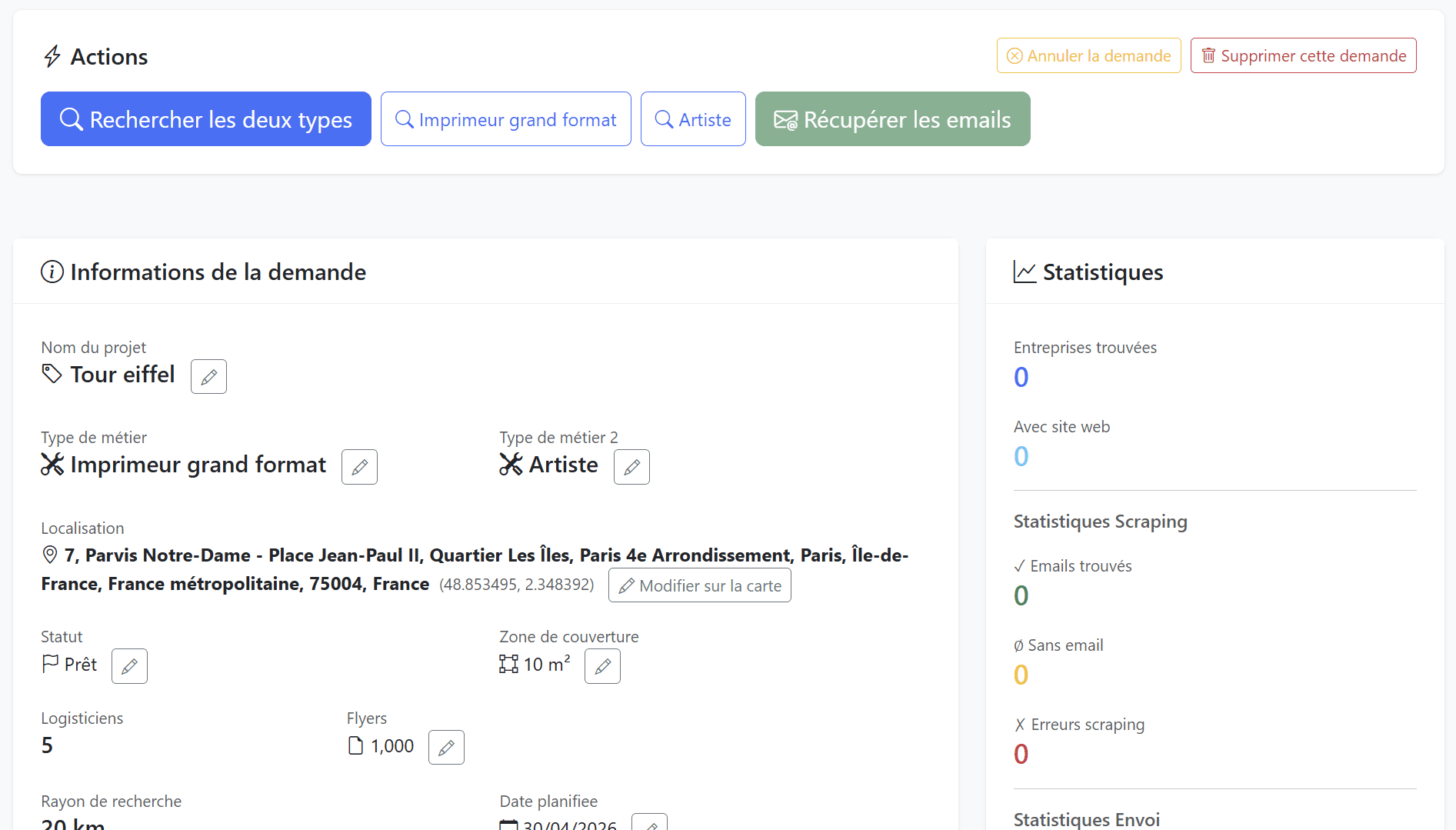
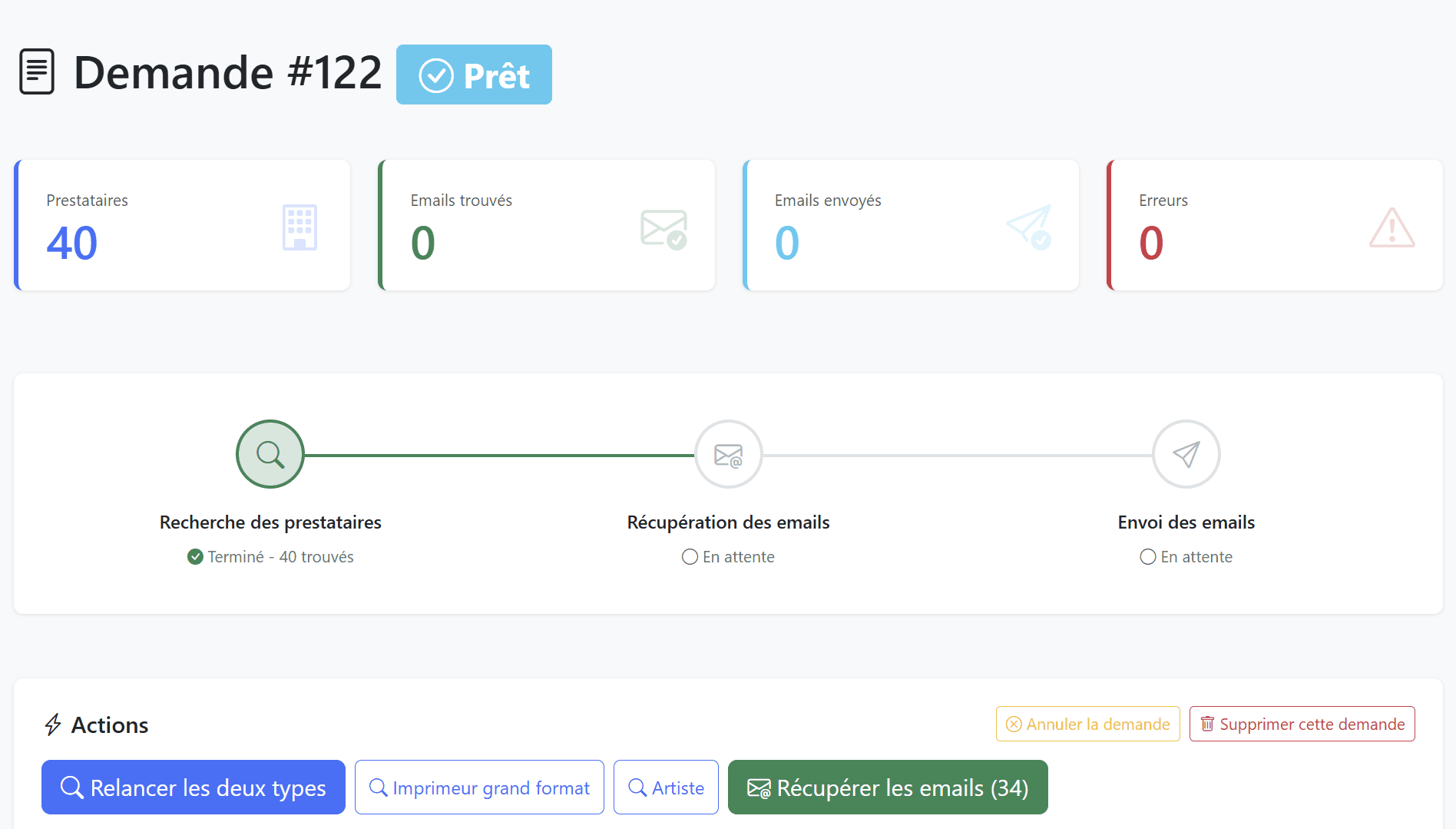
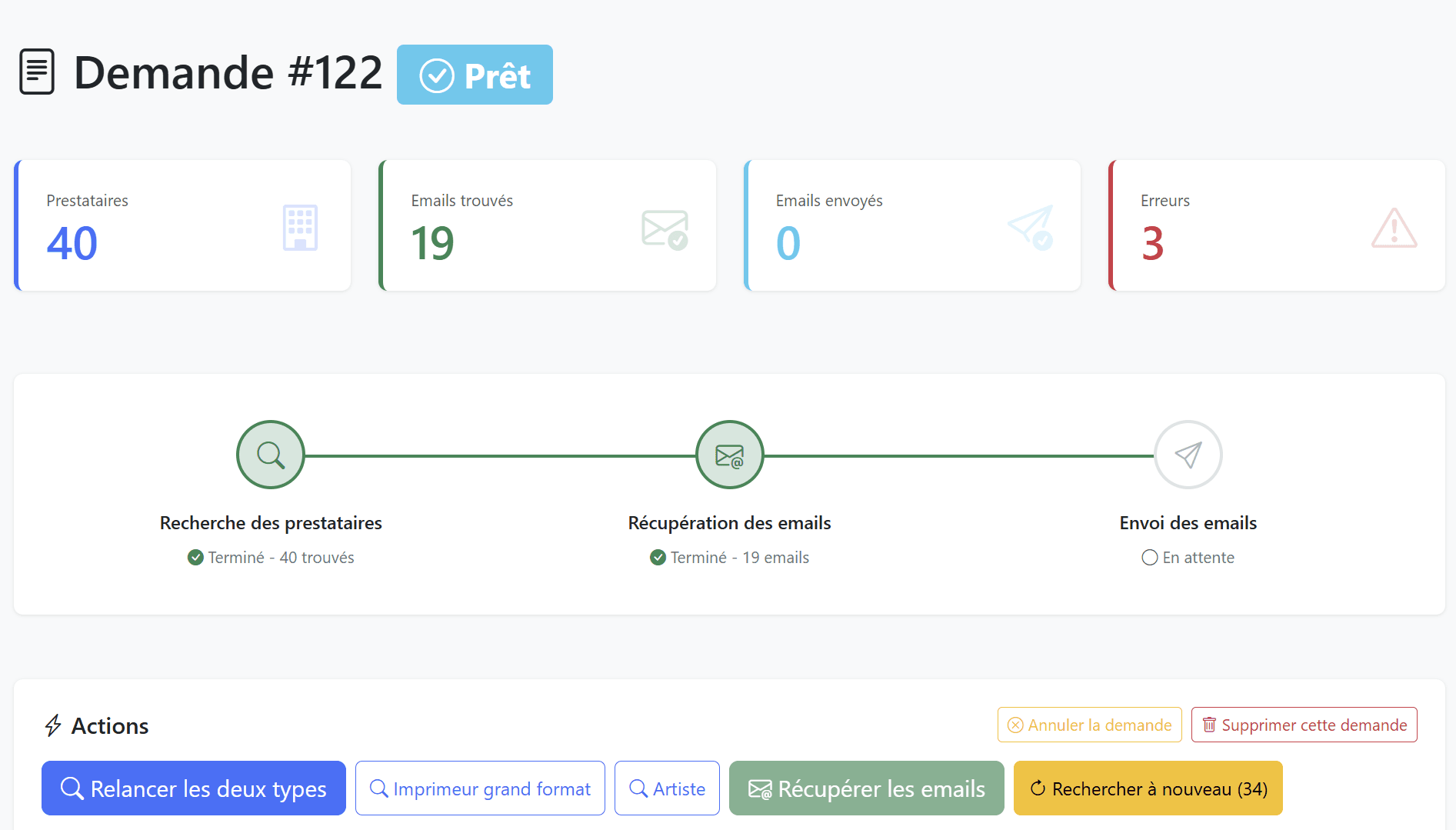
- Provide a complete admin back office to run the 3-step prospecting pipeline
Approach
The project was designed with a microservices architecture, to decouple responsibilities and let each component scale independently:
- development of the React frontend, with React Query for server caching, React Hook Form + Zod for validation and Leaflet for interactive maps;
- design of the FastAPI REST API with a layered architecture (routes, services, repositories), JWT authentication with 2FA and refresh tokens;
- implementation of the 3 independent Python workers (Places, Scraping, Email), following Clean Architecture principles with separate domain, application and infrastructure layers;
- creation of a Node.js microservice dedicated to AI analysis and generation;
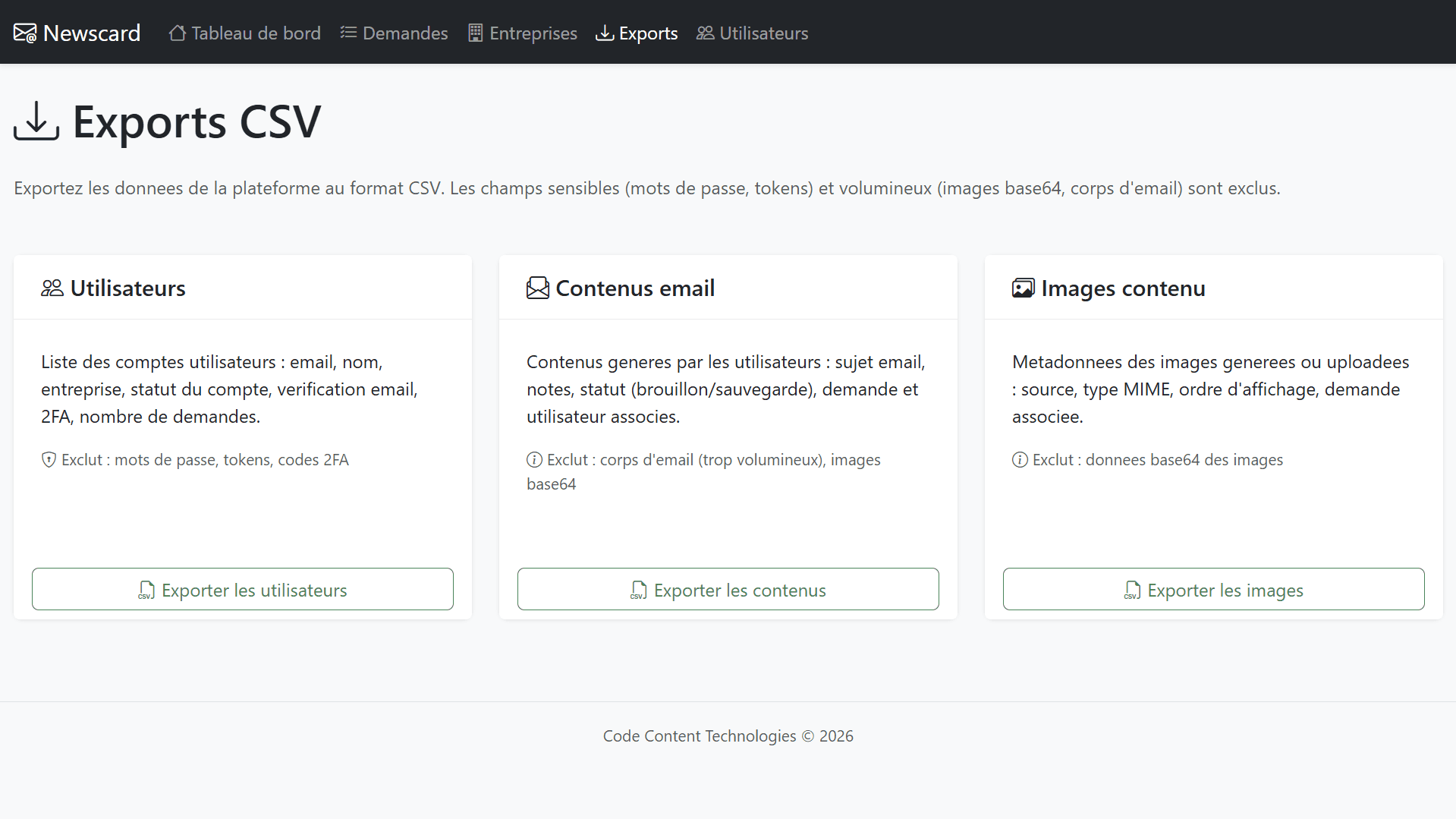
- development of the PHP back office with inline editing, pipeline control and CSV exports;
- full test coverage: 829 tests across 5 suites (React 290, FastAPI 138, Workers 133, PHP 238, AI model 30).
This architecture lets each service evolve independently while communicating through well-defined REST APIs. Everything is orchestrated by Docker Compose with 9 services, deployed on a VPS with Nginx as a reverse proxy and automated backups.
Technical highlights
Frontend: React 19 with Vite 7, TypeScript, Tailwind CSS 4. React Query for server state, React Hook Form + Zod for validation, Leaflet for interactive maps. Complete auth with JWT, 2FA, email verification and admin approval.
Backend API: FastAPI (Python) with async SQLAlchemy 2.0, Alembic for migrations, Pydantic for validation. Layered architecture with dependency injection. JWT access tokens (15 min) + HttpOnly refresh tokens (7 days).
Workers: 3 independent Python workers. Places: searching for providers in directories. Scraping: 7 email extraction strategies (mailto, JSON-LD, data attributes, onclick, DOM patterns, regex, Playwright fallback) with confidence scoring. Email: rate-limited sending through Brevo.
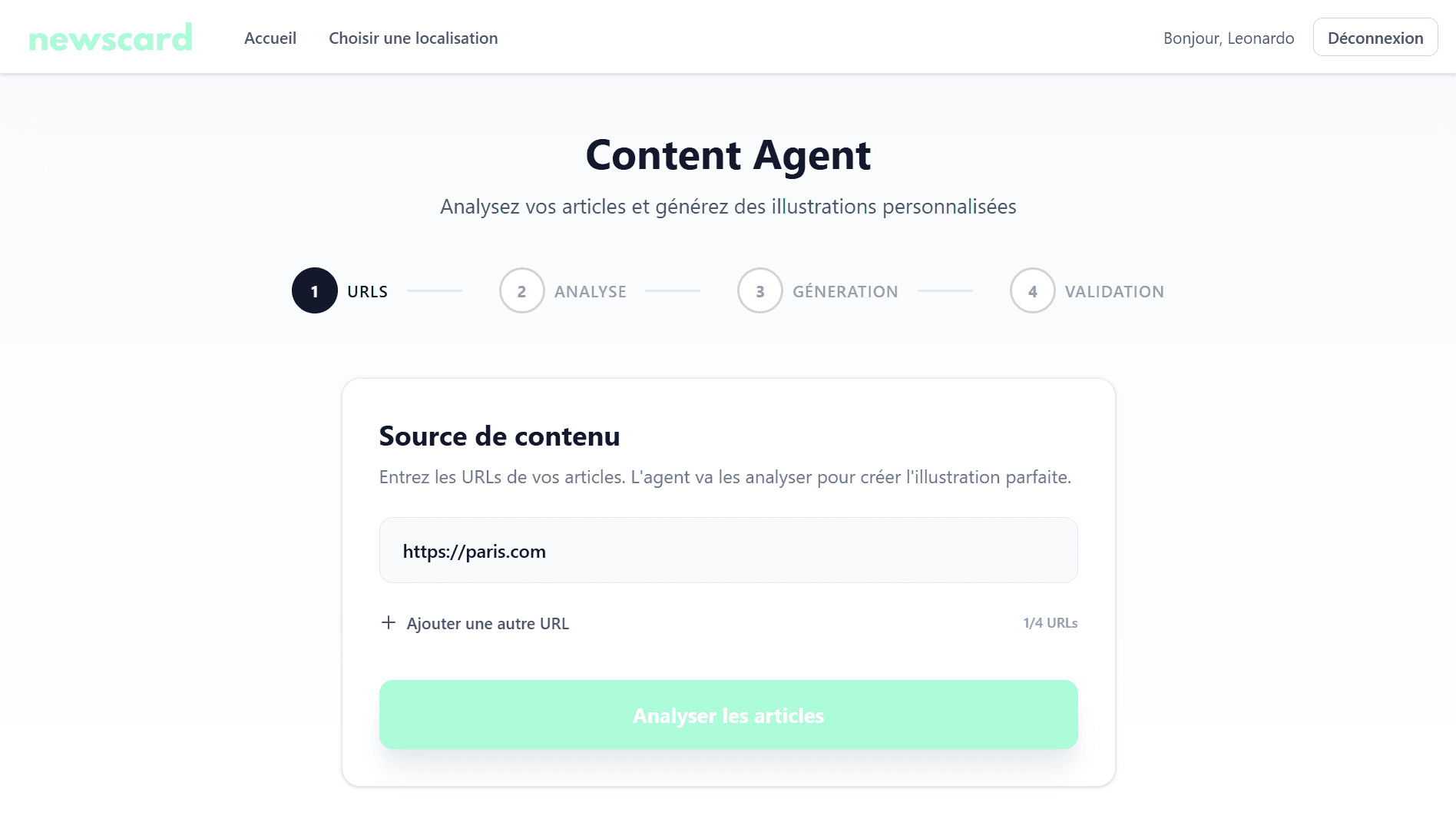
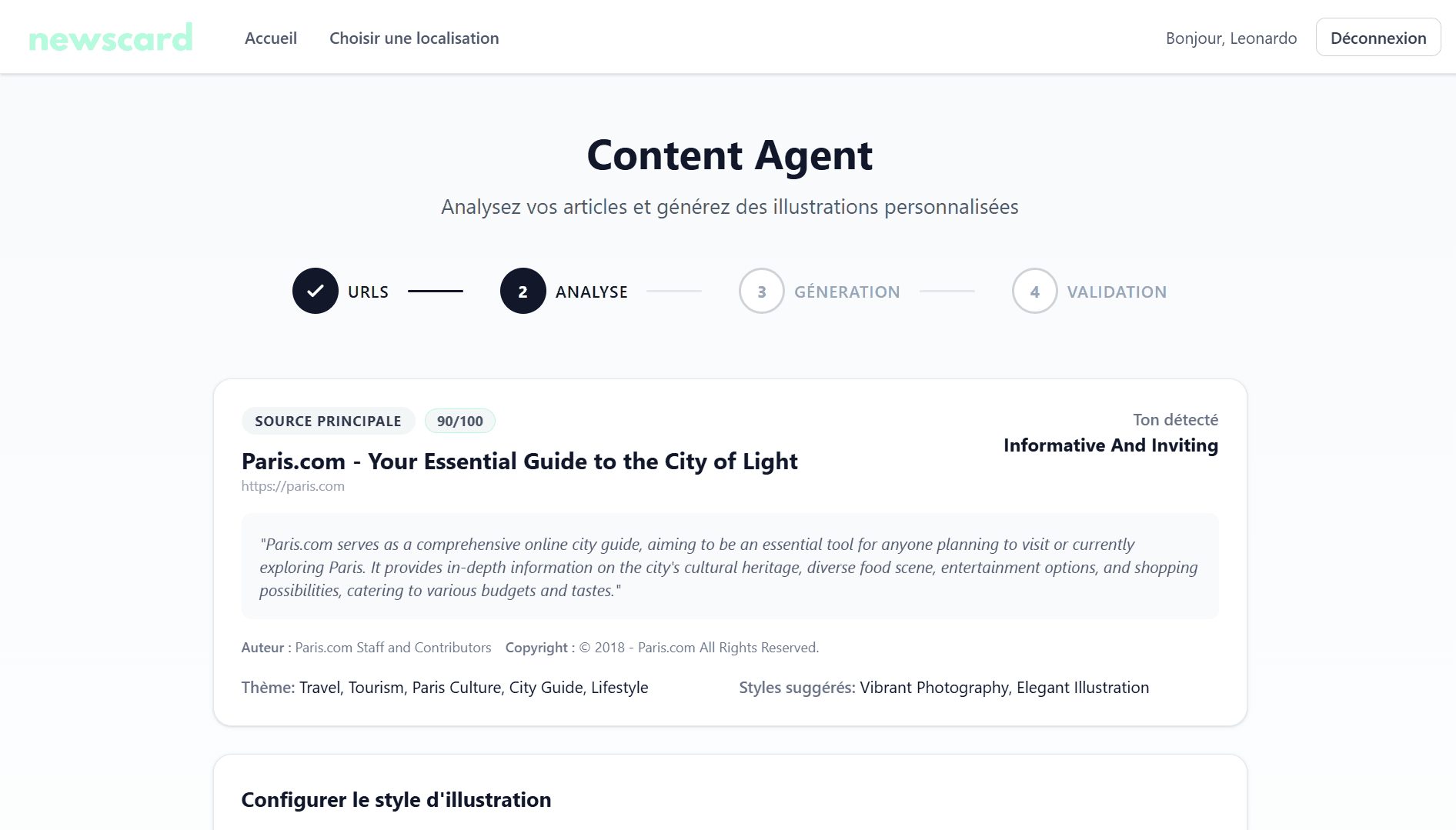
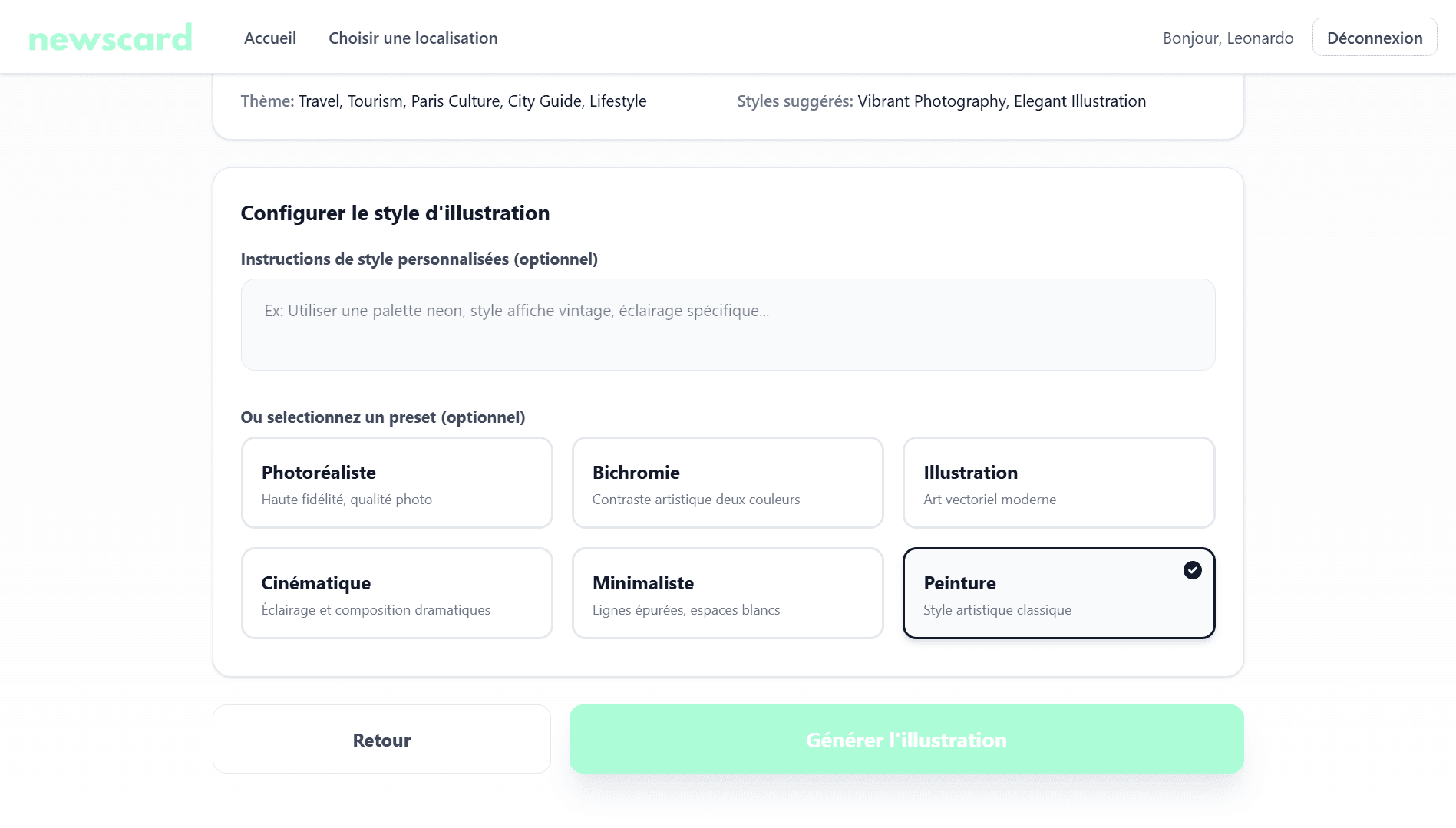
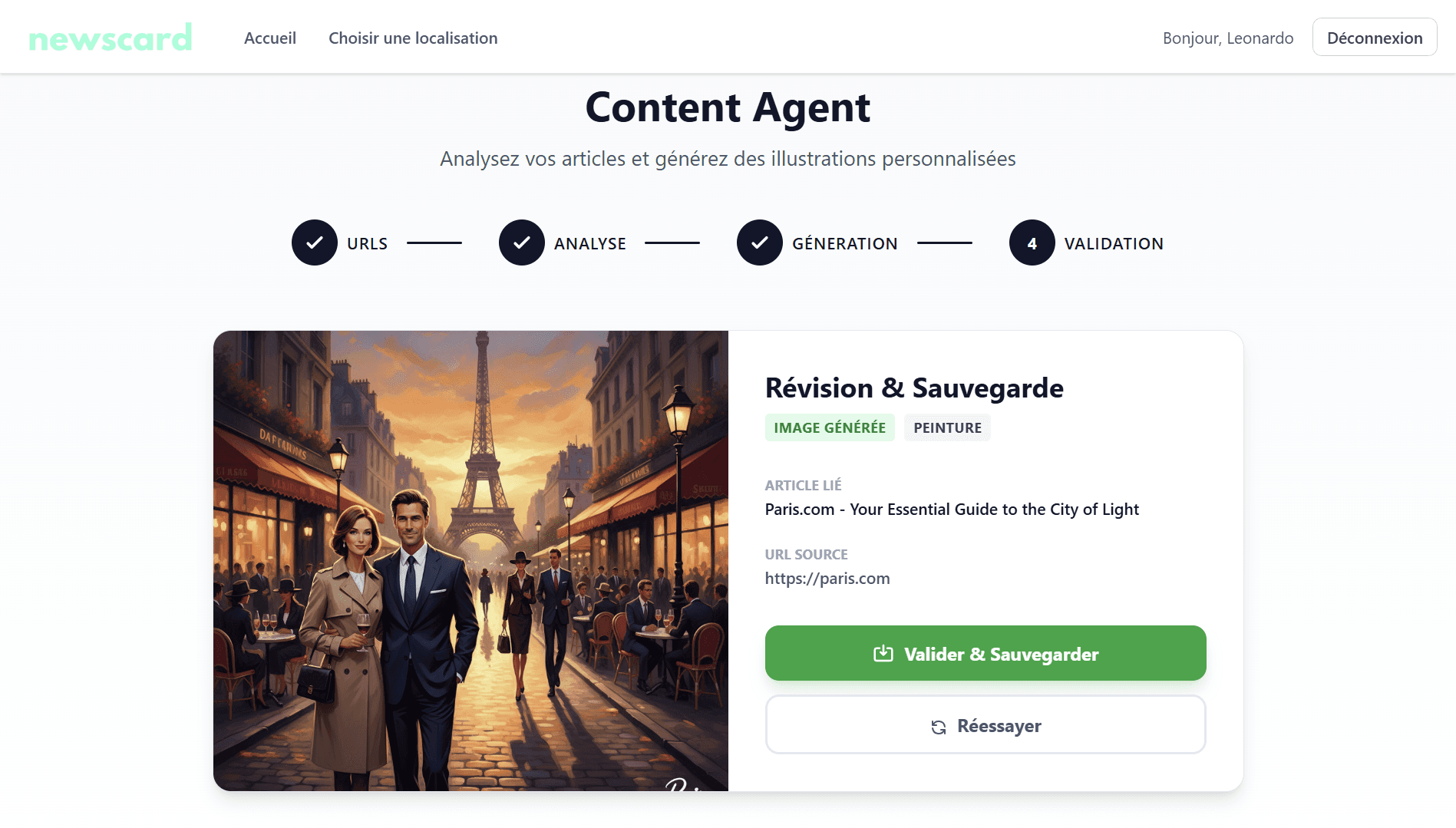
AI: Dedicated Node.js/Express microservice. URL relevance analysis (scoring 0-100), illustration generation in 6 predefined styles + custom. Client-side compression (< 800 KB).
Admin: PHP 8+ back office with dynamic inline editing (factory pattern), 3-step pipeline (Places → Scraping → Email), user account management (approval/rejection), CSV exports.
Infrastructure: Docker Compose orchestrating 9 services (React, FastAPI, PHP, Node.js, Workers, PostgreSQL, pgAdmin, proxy, backups). Staging and production deployments on a VPS with Nginx as a reverse proxy, HTTPS via certbot and a multi-environment configuration. Automated backups with rotation (7d/4w/6m).
Results
The delivered features include:
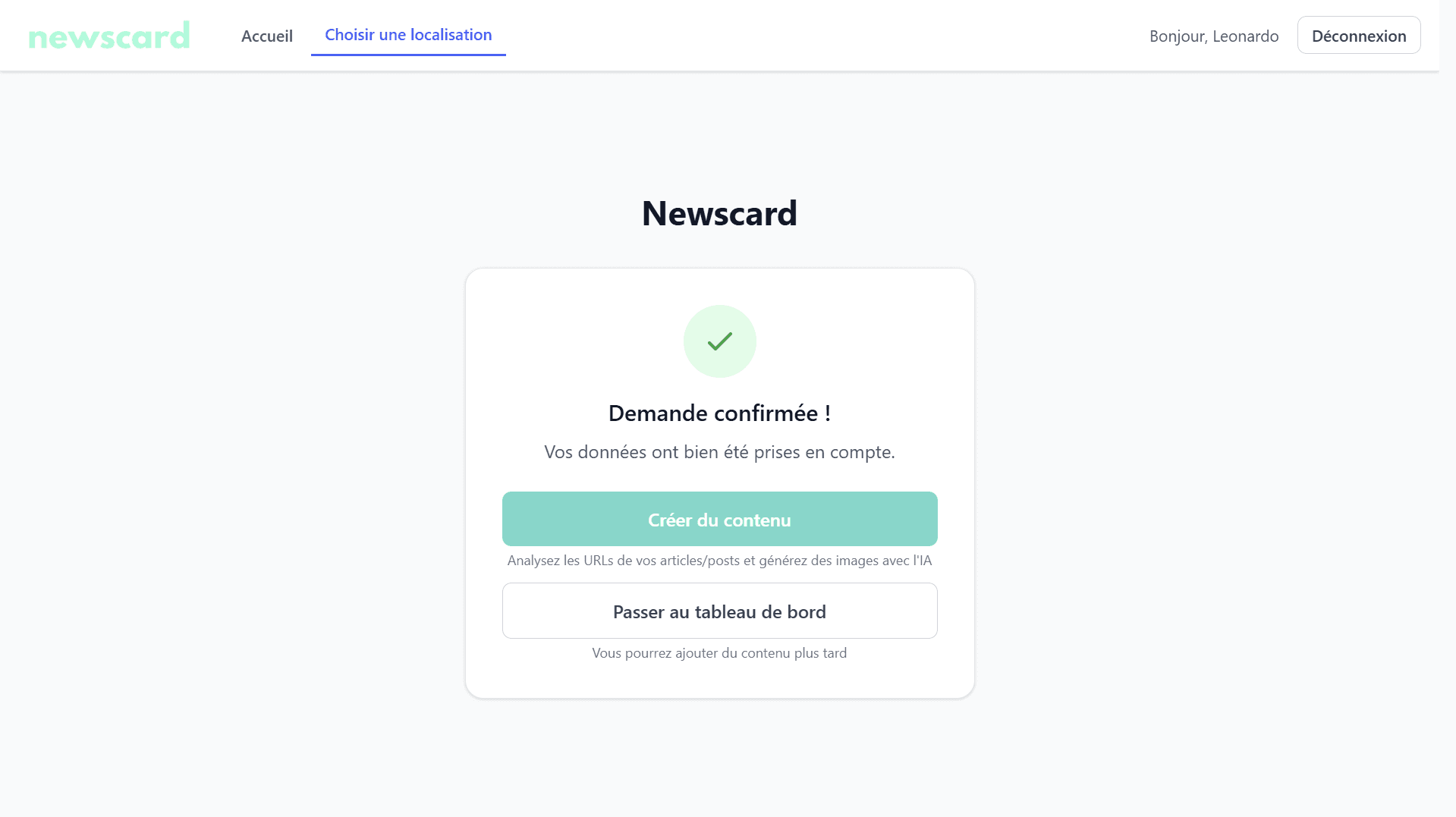
- a complete location module with an interactive map, automatic calculation of logistics providers based on the area, and draft saving;
- a 4-step AI assistant;
- an automated prospecting pipeline, from search to email sending, run from the admin back office;
- a multi-strategy scraper with 7 extraction methods, a Playwright fallback for JavaScript-heavy sites and confidence scoring;
- 829 automated tests covering the whole stack (frontend, backend, workers, admin, AI microservice).
These features turn a manual prospecting process that took several hours into an automated pipeline that runs in a few clicks.
What I learned
- designing a complete microservices system with 5 independent components communicating through REST APIs;
- implementing a robust scraper with 7 extraction strategies and SSRF protection;
- integrating a generative AI model's API for content generation in a dedicated microservice;
- designing a complete authentication system (JWT, 2FA, refresh tokens, email verification, admin approval);
- orchestrating 9 Docker services and managing staging/production deployment on a VPS with Nginx, HTTPS and automated backups;
- reaching significant test coverage (829 tests) on a polyglot stack (TypeScript, Python, PHP, Node.js).
These features of the Newscard application are my most technically complete project: they pushed me to master microservices architecture, advanced web scraping and AI integration, while keeping code quality high across 4 different languages.